
I recently made the trip down to Cameron, Texas to join Rod Baltzer and the Deep Isolation team at the Deep Borehole Demonstration Center, where Deep Isolation and its collaborators are conducting a full-scale, nonradioactive demonstration of the company’s deep borehole disposal technology and Universal Canister System. The purpose was to get a group of industry leaders together and take a hard look at the next steps of a technology that could change how we solve one of the nuclear industry’s biggest problems.
And let me tell you—the collection of people and companies Deep Isolation has assembled is impressive. Folks from very different backgrounds are bringing their experience to the same table to figure out how we safely and permanently deal with nuclear waste. That is no small undertaking.
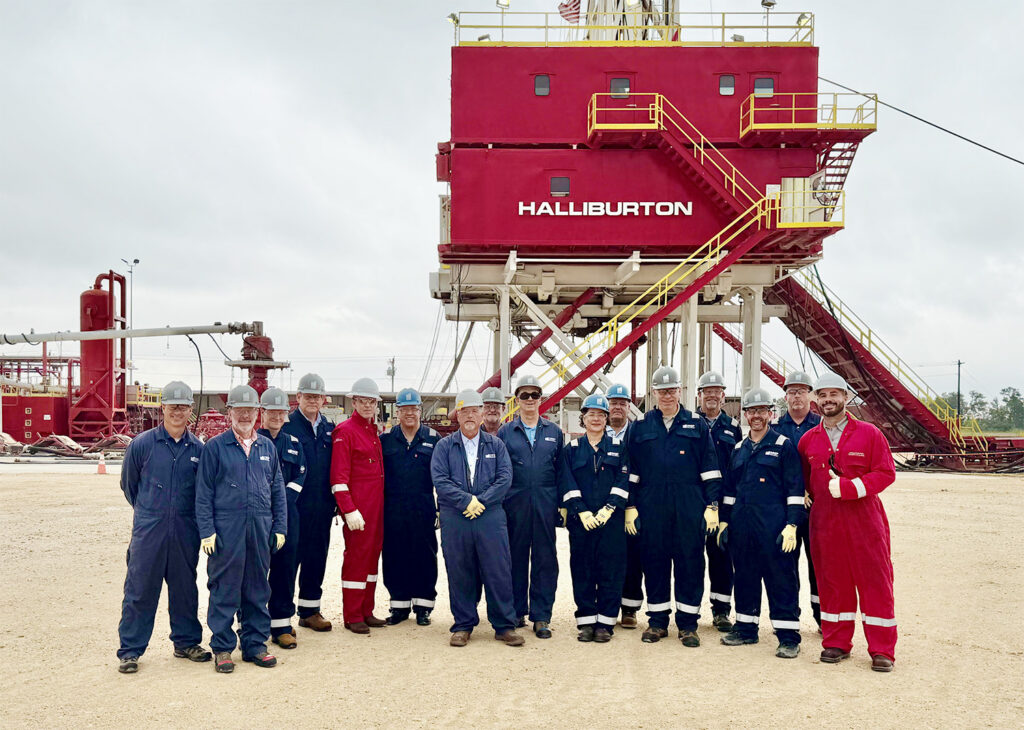
The trip also brought back a few memories from my oilfield days — some good and some I had probably worked pretty hard to forget. I once swore I would never climb another set of stairs to a doghouse, yet there I was again. It is honest work, though, and there is nothing quite like it. And while the rig felt familiar, we were there for an entirely different purpose: deep borehole disposal.
What stood out most was Deep Isolation’s attention to detail. There is a real process behind every part of this approach. We are bringing together two industries—nuclear and oilfield—that speak different languages, follow different rules, and occasionally believe their way is the only right way.
But that is also what makes this effort special.
The willingness of both sides to listen, learn, and work together has been inspiring—and more than a little educational. Things we take for granted on a rig floor can sound downright complicated to someone who has never been around one. And when you start talking about drilling and steering a horizontal well large enough to safely place these canisters, you realize just how complicated the process can get.
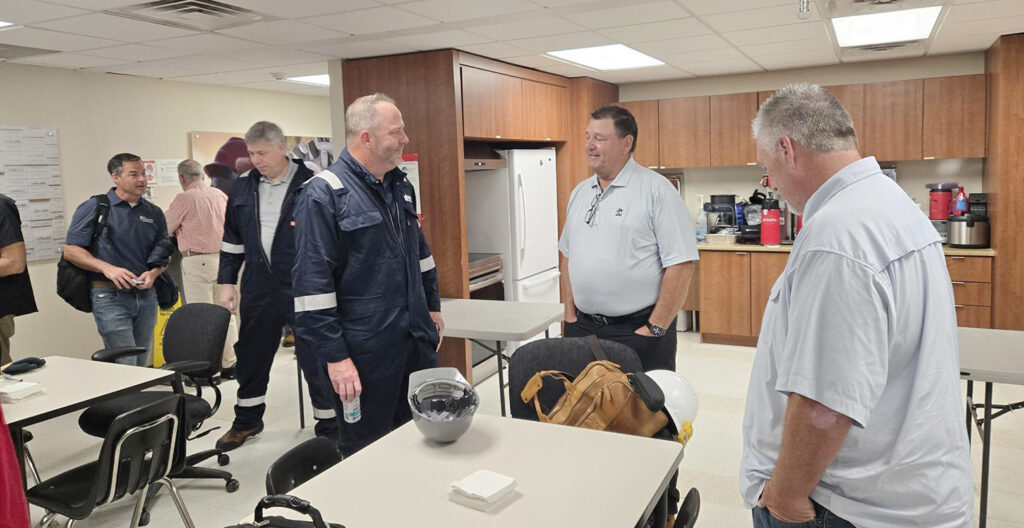
I was also reminded that I need to quit saying we are going to “drop something in the hole.” That is one of those phrases that means something very different depending on which industry you come from. In the oilfield, saying you’re going to drop something downhole could mean something as routine as a traveling valve. In the nuclear business, dropping anything is generally a bad idea. We will be placing these canisters—carefully and precisely.
At the end of the day, this is about combining the best of two industries to solve a problem that has been passed down for years. And now, for the first time, we have a practical solution with the potential to make sure our children and grandchildren are not left holding the bag.
This work also gives us a platform to educate people. Understandably, nobody hears “nuclear waste” and immediately says, “Sure, put that in my backyard.” But when people start to understand the science and engineering behind deep borehole disposal, from how deep the waste is meticulously placed, to how the geology of the host rock supports isolation of the waste, to the safety measures in place, the conversation begins to change.
I left Cameron inspired—by the technology, the people, and the opportunity to help others understand what is being built.
Two industries are coming together, a generational problem is finally meeting a viable solution, and somehow Rod and I, a couple of rural Oklahoma boys, ended up right in the middle of it.
History is going to be made here—and I’m proud to have a front-row seat.