Deep Isolation has developed an innovative solution to address the critical national challenge of how to safely dispose of nuclear waste. Our technology is designed to support both existing nuclear power plants and the next generation of advanced nuclear reactors and SMRs.
As the United States expands nuclear energy to strengthen energy security, power economic growth, and meet rising electricity demand, safe and permanent nuclear waste management becomes increasingly important.
Our first priority is protecting human health and the environment. We are committed to meeting and exceeding today’s regulatory requirements. Equally important is how we go about our work: we are committed to earning trust through transparency, accessibility, technical rigor, and meaningful engagement with communities.
Community engagement is informed by both local conversations and broader public perspectives. 62% of Americans supported giving states a role in developing geologic disposal facilities under federal safety oversight, reinforcing the importance of working with communities throughout the siting process. Explore the results of nationally representative YouGov survey to learn how Americans view permanent nuclear waste disposal.
Genuine Community Partnership for Better Outcomes
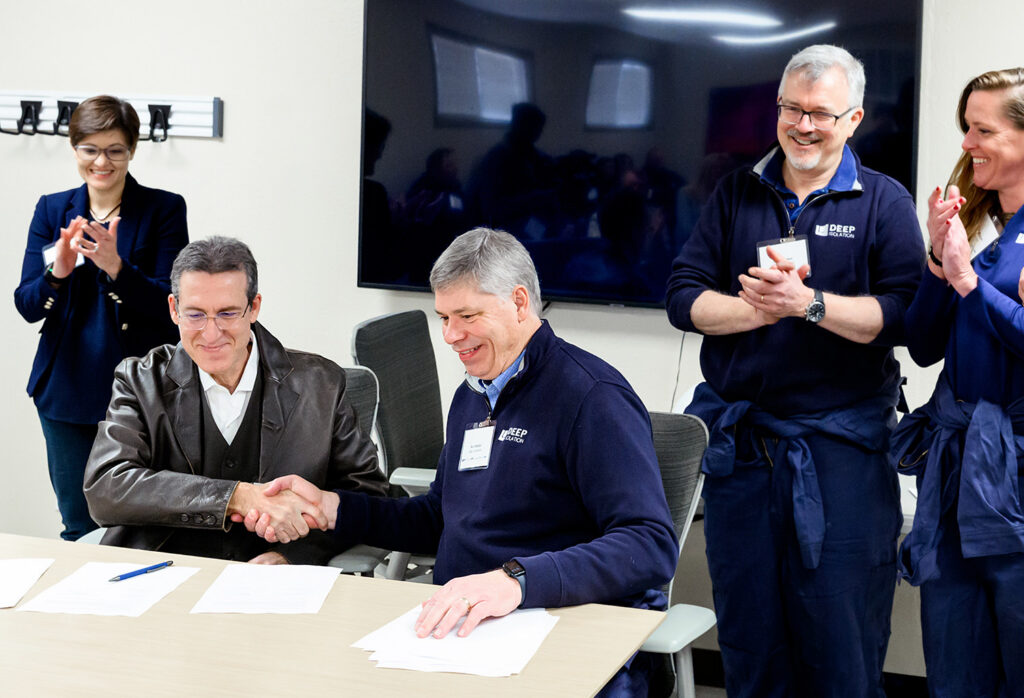
Our model of community partnership is built around a shared understanding of nuclear waste management and long-term environmental stewardship. We work collaboratively with stakeholders, local leaders, regulators, Tribal representatives, and interested members of the public to build informed, lasting relationships.
We are committed to:
- A successful outcome, one that can be achieved through listening, transparency, and accessibility.
- Engaging in detailed, public discussions regarding the design, safety and scope of our proposed solution.
- Providing thoughtful and timely responses to questions, ideas, and concerns raised by interested parties.
- Supporting informed community participation throughout the lifecycle of a project.
- Maintaining long-term accountability, oversight, and environmental stewardship.

Hosting a Deep Isolation Solution
We believe that hosting a Deep Isolation facility can provide environmental, safety and economic benefits to a willing and informed host community. Deep Isolation’s technology is designed to support existing nuclear power plants and the next generation of advanced nuclear reactors and small modular reactors (SMRs). A successful Deep Isolation facility requires 3 key components:
Geology / Geography
- The site is located within a suitable geologic environment.
- The site is not subject to cultural restrictions or significant subsurface resource extraction.
- Scientific analysis demonstrates that groundwater and pore water at disposal depth have remained isolated from the surface environment for extended geological timeframes.
- The geology supports long-term isolation and containment of radioactive materials.
Community Value
- The project is supported by a willing and informed host community.
- Community engagement remains open, transparent, and ongoing throughout the life of the facility.
- The facility contributes to long-term local economic development.
- Local stakeholders have opportunities to participate in oversight and public dialogue.
- Emergency preparedness, environmental monitoring, and public safety remain central priorities.
Regulatory Rigor
- The project complies with all applicable local, state, and federal regulations.
- Technical analyses and safety evaluations support licensing and regulatory review.
- Regulatory approvals and community engagement are maintained throughout the lifecycle of the facility.
- Deep Isolation is committed to maintaining the highest standards of safety, environmental protection, and operational accountability.

Potential Community Benefits
In addition to meeting geological, regulatory, and community requirements, a Deep Isolation facility may provide long-term benefits to the host community, including:
- Long-term skilled employment opportunities
- Local infrastructure and service investment
- Partnership opportunities with regional educational institutions
- Stable long-term economic activity tied to clean energy infrastructure