
Americans Want a Permanent Solution to Nuclear Waste
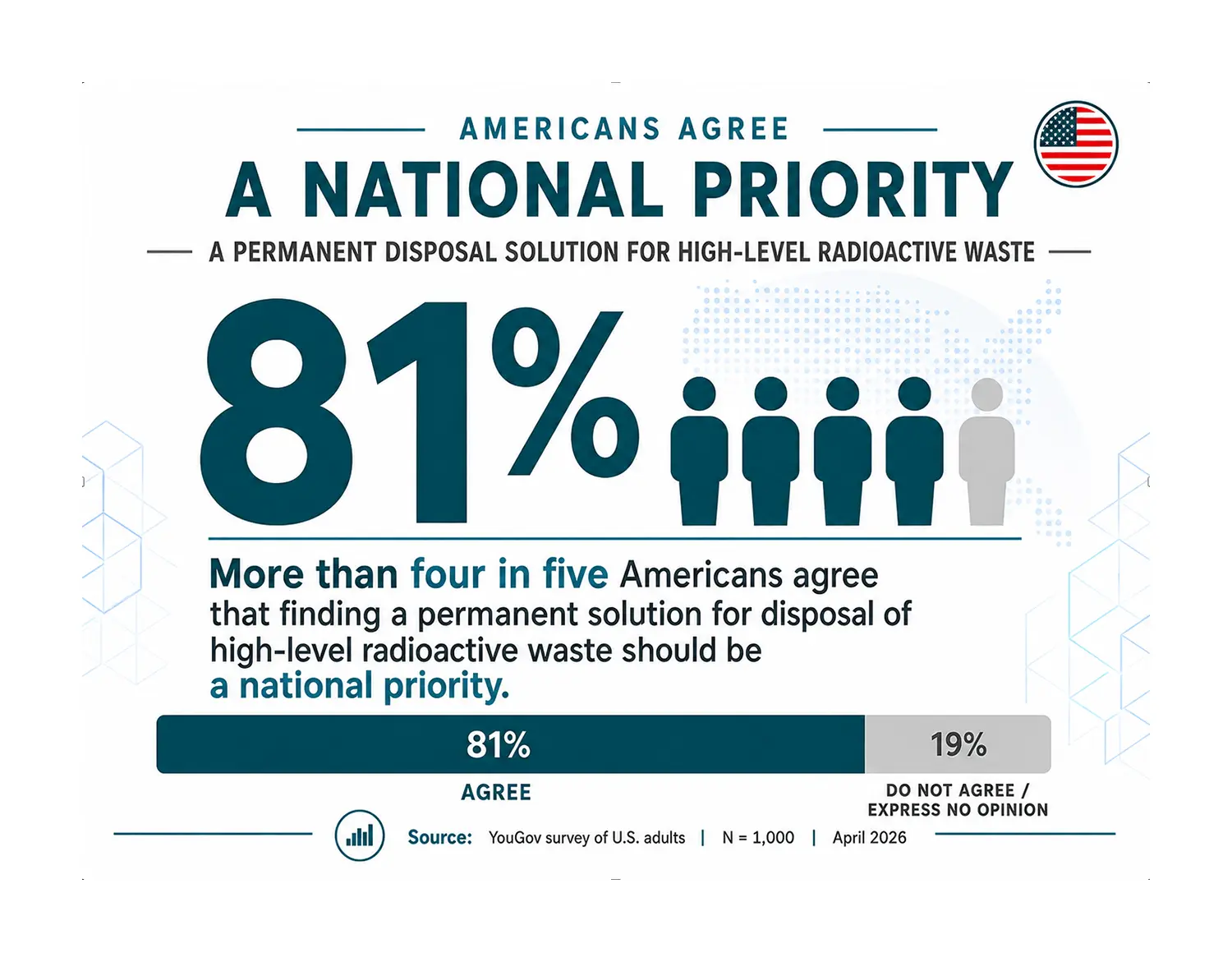
More than four in five Americans believe finding a permanent solution for high-level radioactive waste should be a national priority.
As Deep Isolation develops technologies for the permanent disposal of nuclear waste, we recognize that successful implementation depends not only on science and engineering, but also on public confidence and informed decision-making. To gain insight into public perspectives, Deep Isolation commissioned a nationally representative YouGov survey of 1,000 U.S. adults to explore public perspectives on nuclear waste management, permanent disposal, deep borehole disposal, and the future of nuclear energy.
Comparing Geologic Disposal Concepts
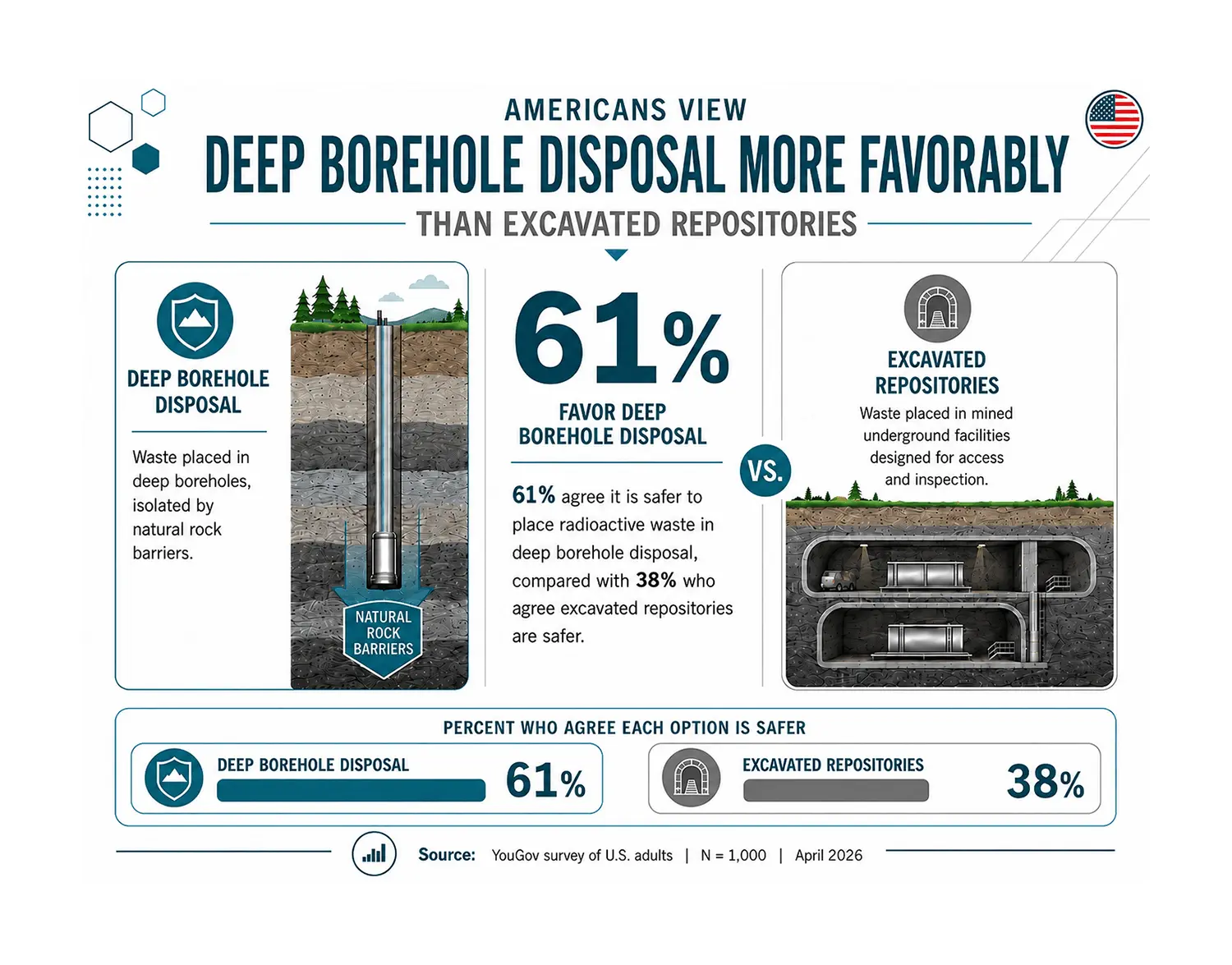
To better understand public perceptions of permanent disposal, the survey introduced respondents to two geologic disposal concepts: excavated repositories and deep borehole repositories. Participants reviewed neutral, side-by-side information comparing the approaches before evaluating which they considered the safer option. Following the comparison, 61% of respondents identified deep borehole disposal as the safer option for the permanent disposal of high-level radioactive waste.
Americans Prefer Solutions that Reduce Transportation
Used nuclear fuel is currently stored at reactor sites across the United States, and future disposal strategies may require transporting it to a permanent repository.
74% of survey respondents agreed that the United States should consider safe underground disposal methods that minimize the need to transport used nuclear fuel and high-level radioactive waste over long distances[SM1] .
A safe long-term solution is to place high-level radioactive waste deep underground.
The US should allow states — not only the federal government — to apply for licenses to develop geologic disposal facilities, subject to federal safety regulations.
Reprocessing used nuclear fuel to recycle materials and reduce volumes for eventual disposal is a good approach for the US.
The US should consider safe underground disposal methods that minimize the need for transporting used nuclear fuel and high-level radioactive waste long distances.
- Strongly agree
- Somewhat agree
- Somewhat disagree
- Strongly disagree
- Don’t know
Public Views on a Practical Nuclear Waste Disposal Plan
States and Communities have a Role to Play
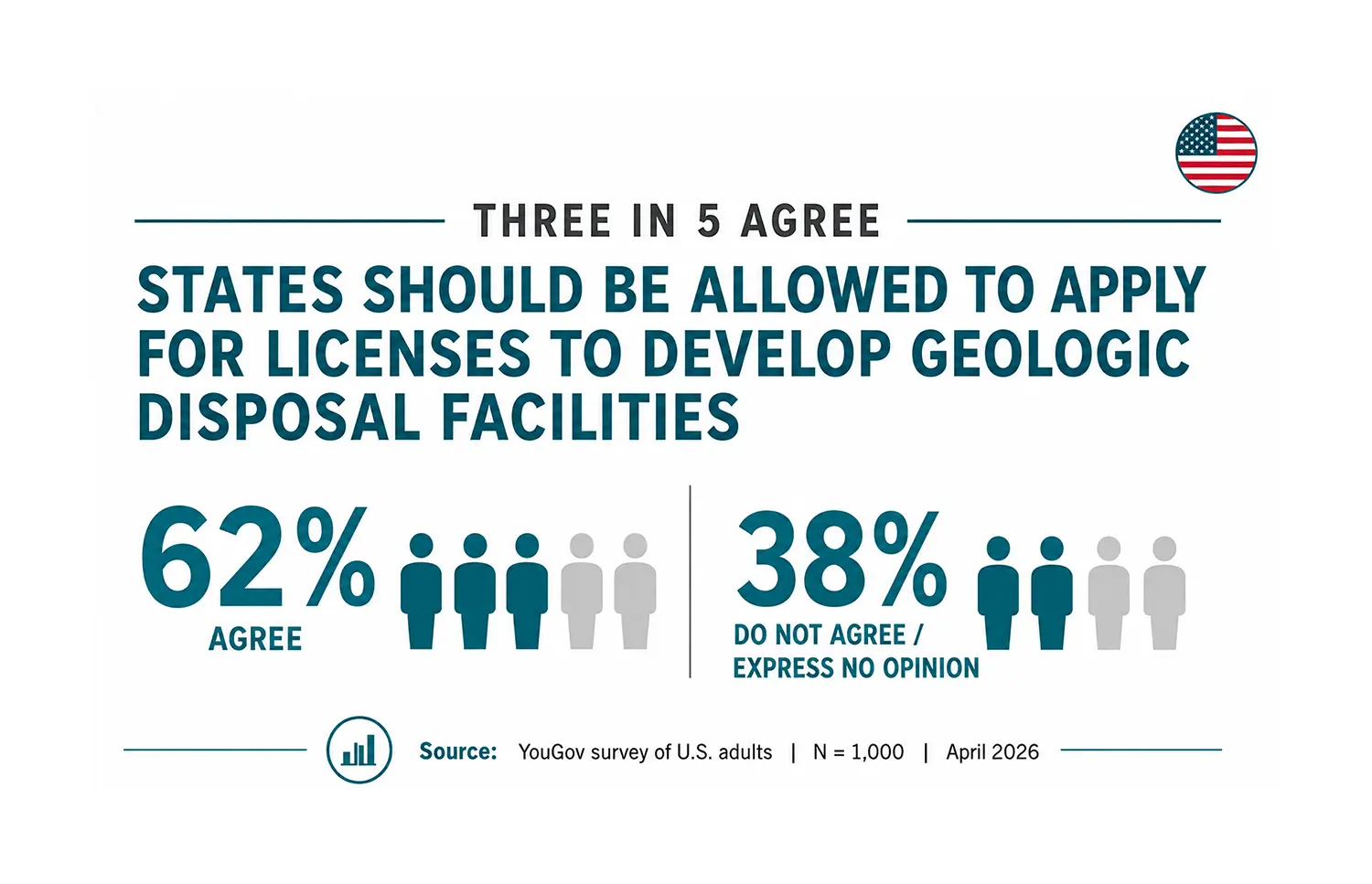
As the United States considers future approaches to permanent nuclear waste disposal, the survey found broad support for giving states a greater role in the process. 62% of respondents supported allowing states to apply for licenses to develop geologic disposal facilities under federal safety oversight. Recent U.S. Department of Energy initiatives, including the Nuclear Lifecycle Innovation Campus (NLIC) program recognizes that expanding nuclear energy also requires planning for the long-term management and permanent disposal of spent nuclear fuel.
Americans Trust Scientists and Engineers
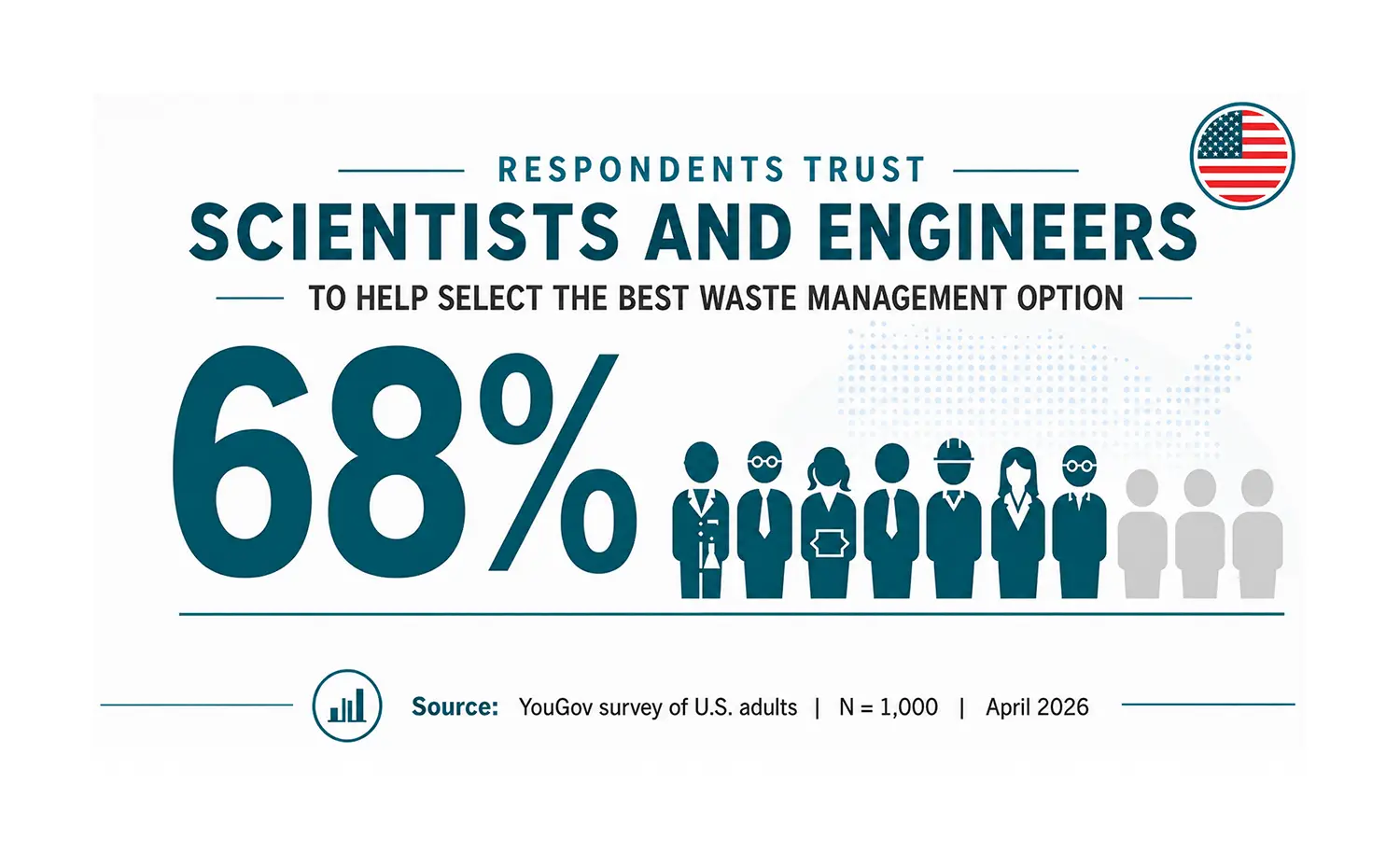
Alongside preferences for permanent disposal, reduced transportation, and state participation, the survey also explored who Americans trust to guide long-term nuclear waste decisions. 68% of respondents trust scientists and engineers to assist the government in selecting the best nuclear waste management option, compared with 37% who trust the U.S. government alone to make sound decisions about nuclear energy policy. The findings reinforce the importance of technical expertise as the United States evaluates long-term nuclear waste solutions.
Conclusion:Looking Ahead
The future of nuclear energy depends on solving the problem of nuclear waste. The survey shows that public opinion has moved beyond whether a permanent solution to nuclear waste is needed to what the solution should look like: Attitudes Toward Nuclear Waste in the United States (YouGov Survey, published August 2026).


FAQS
Deep Isolation answers frequently asked questions about our technology, our process, and safety.