
Advancing deep borehole disposal takes more than engineering work at a desk. It takes time in the field: sharing our plans with others, asking questions, and learning from people with hands-on experience in nuclear waste management. Two recent visits in Texas gave our team opportunities to do both.
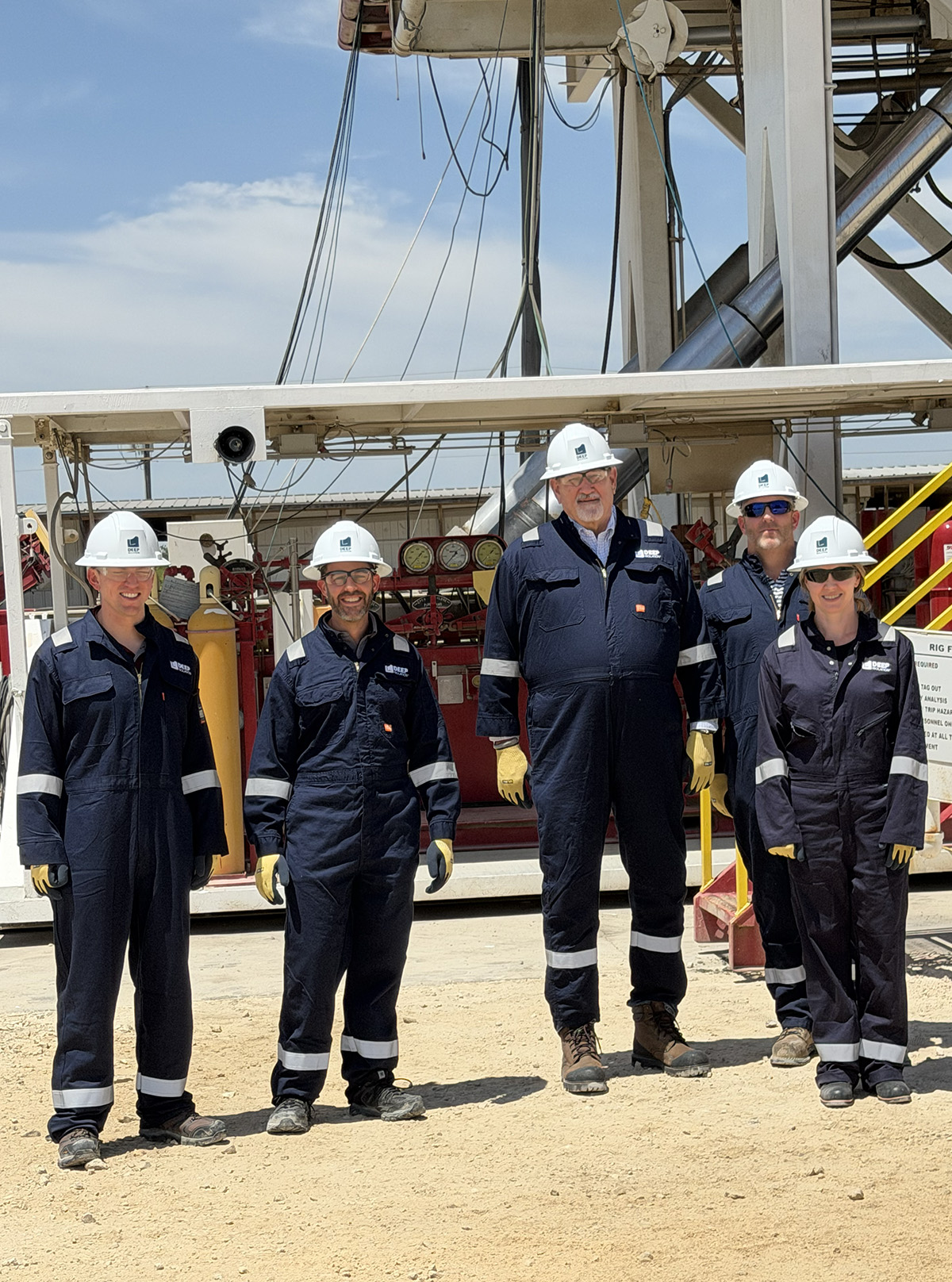
On August 19, Deep Isolation and the Deep Borehole Demonstration Center welcomed Doug True, Chief Nuclear Officer of the Nuclear Energy Institute, to our demonstration site in Cameron, Texas. Doug toured the site, saw our Universal Canister System up close, and joined us for a detailed discussion of our technology and plans for a full-scale, end-to-end, non-radioactive demonstration. Standing beside the drilling rig that will be used for the demonstration well helped make those plans tangible.
What stood out was the depth of Doug’s technical questions. He wanted to understand how we arrived at our safety case results and why we selected the objectives and expected outcomes for the Cameron demonstration. That led to a detailed discussion of the analysis and engineering reasoning behind our work. As engineers, we especially enjoy those conversations – the opportunity to explain our thinking, work through questions, and share the technical details of work we care deeply about.
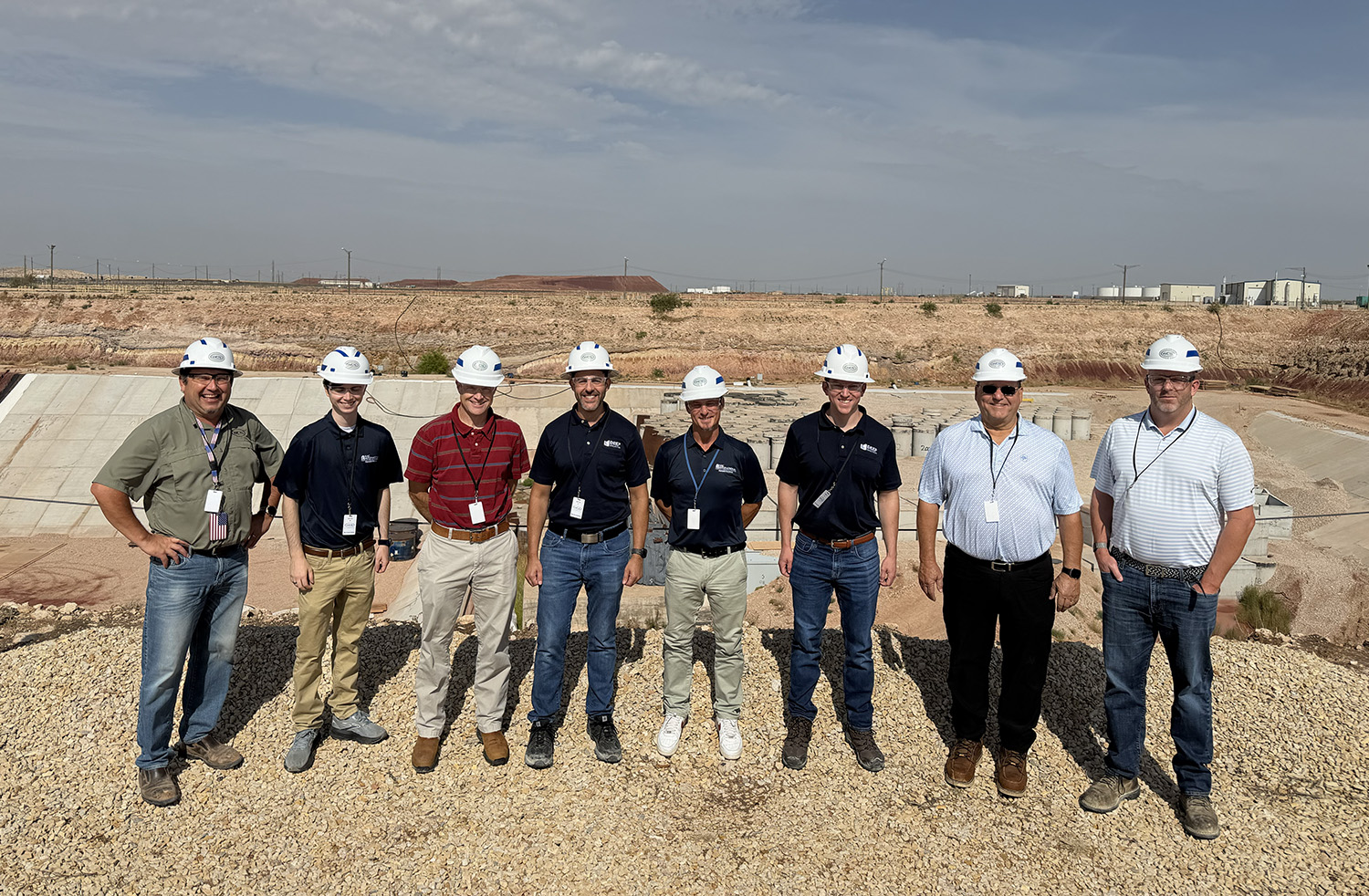
A few weeks later, on September 16, members of Deep Isolation’s Engineering team visited Waste Control Specialists (WCS) in Andrews, Texas. Alongside colleagues from NAC International and Occlusion Nuclear Solutions, we toured WCS’s low-level radioactive waste disposal facility and learned about its equipment, processes, and day-to-day operations. We are working together to deliver the world’s first full-scale, end-to-end demonstration of deep borehole disposal technology, and seeing an operating disposal facility firsthand offered valuable perspective for that work.
The scale of WCS’s operations stood out. Seeing an active low-level waste repository gave us a practical reference for operational concerns and practices that could also inform a future borehole repository. A central reason for the visit was to examine WCS’s shielded transfer system for handling higher-activity components. Seeing it up close and discussing it with WCS staff and our colleagues designing similar systems brought practical considerations into focus – from contamination control and radiation protection to visibility and equipment fit. Those conversations were invaluable as we develop systems for our borehole operations and demonstration.
Walking a site and seeing equipment in person adds a dimension that drawings and photographs on a computer screen cannot provide. With the system in front of us, we can ask experienced operators what works, what does not, and how they have resolved unexpected problems. Those conversations connect engineering designs with the realities of operation. We appreciate Doug’s interest in our work and the WCS team’s generosity in sharing theirs. Both visits reinforced something essential to progress in this field: we move forward by sharing what we know and continuing to learn from those doing the work.