Advancing deep borehole disposal takes more than engineering work at a desk. It takes time in the field: sharing our plans with others, asking questions, and learning from people with hands-on experience in nuclear waste management. Two recent visits in Texas gave our team opportunities to do both.
Deep Isolation and Doug True from NEI at the DBDC in Cameron, TX
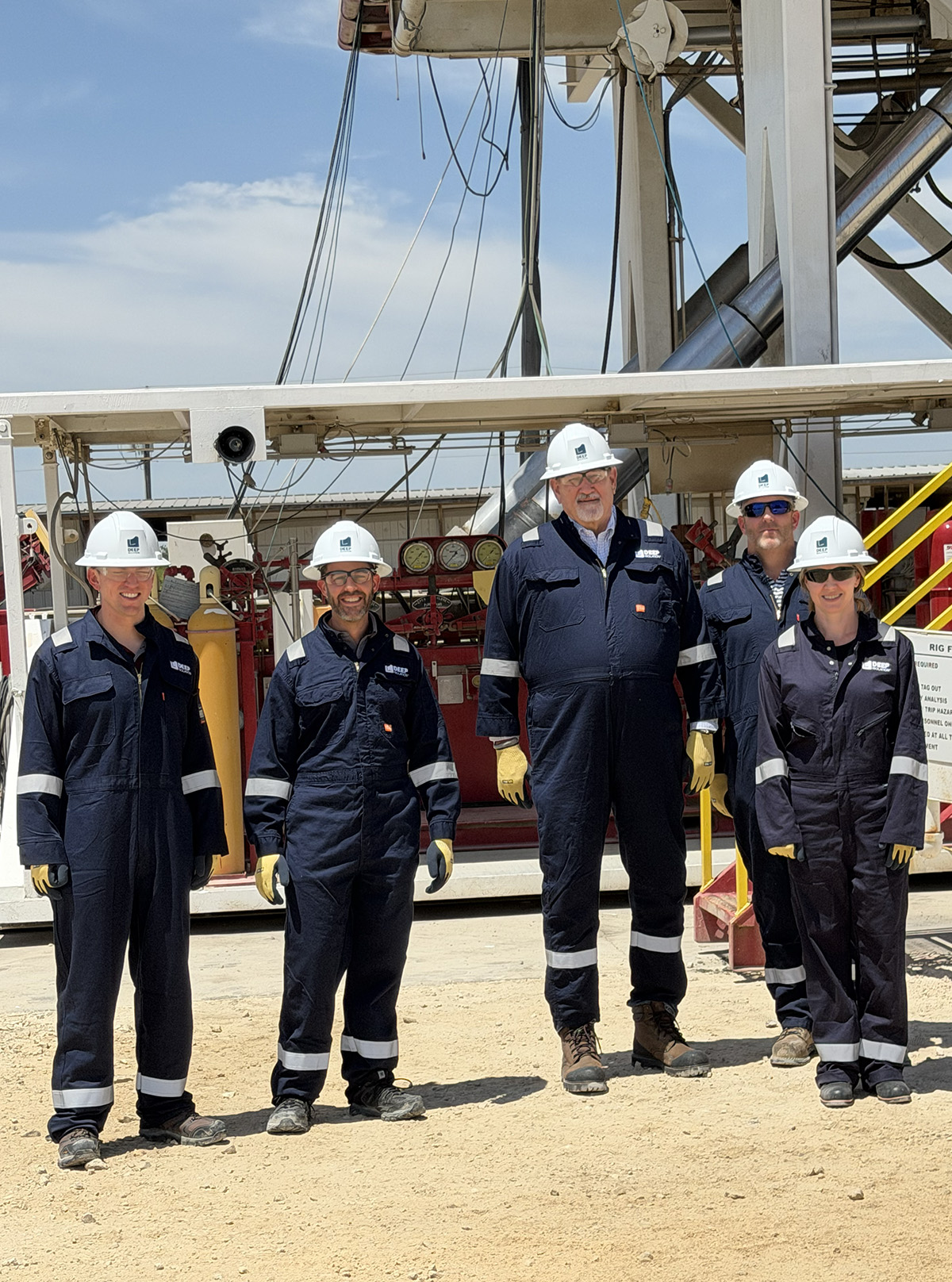
On August 19, Deep Isolation and the Deep Borehole Demonstration Center welcomed Doug True, Chief Nuclear Officer of the Nuclear Energy Institute, to our demonstration site in Cameron, Texas. Doug toured the site, saw our Universal Canister System up close, and joined us for a detailed discussion of our technology and plans for a full-scale, end-to-end, non-radioactive demonstration. Standing beside the drilling rig that will be used for the demonstration well helped make those plans tangible.
What stood out was the depth of Doug’s technical questions. He wanted to understand how we arrived at our safety case results and why we selected the objectives and expected outcomes for the Cameron demonstration. That led to a detailed discussion of the analysis and engineering reasoning behind our work. As engineers, we especially enjoy those conversations – the opportunity to explain our thinking, work through questions, and share the technical details of work we care deeply about.
Deep Isolation’s Engineering team visited Waste Control Specialists (WCS) in Andrews, TX
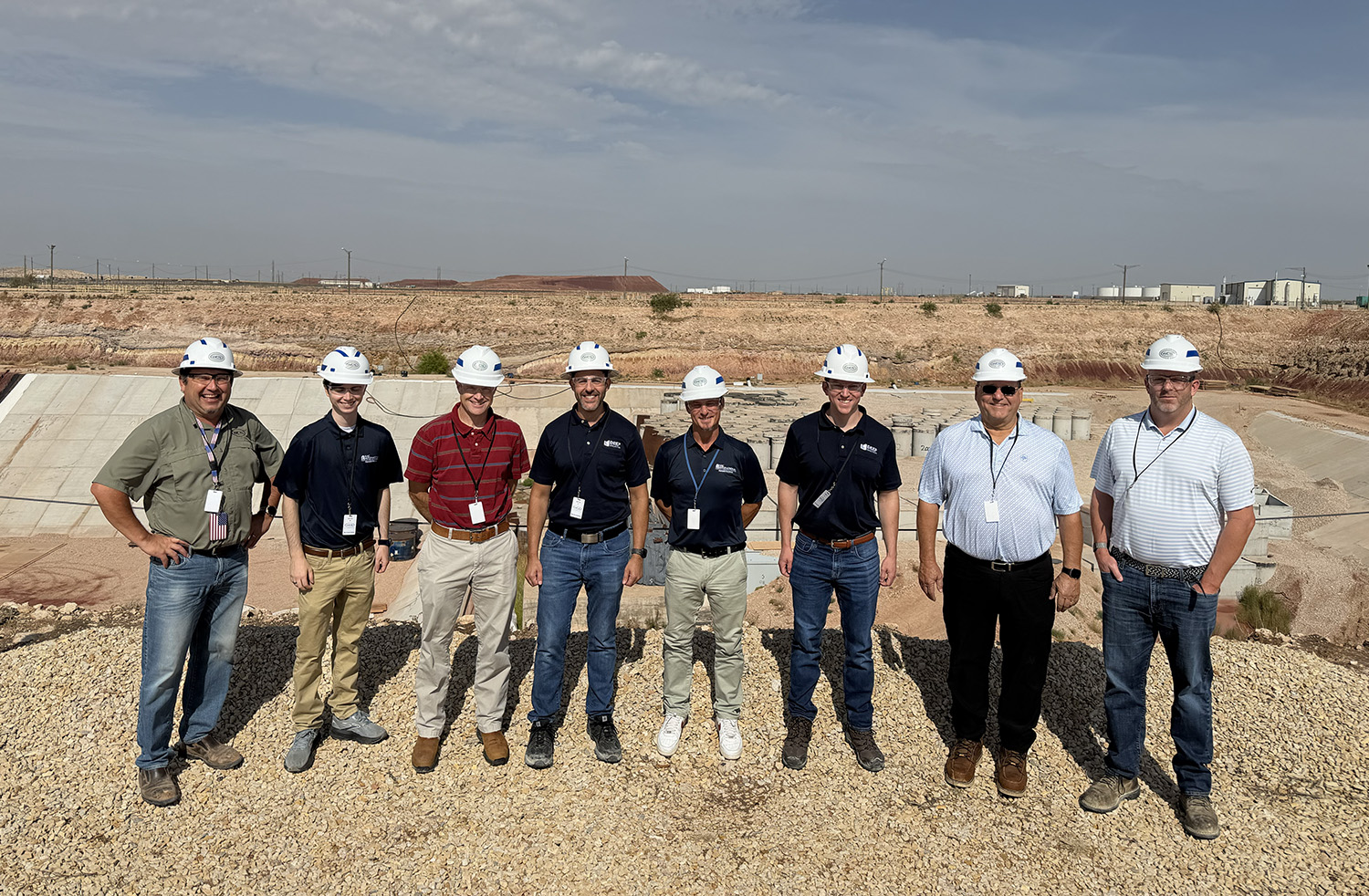
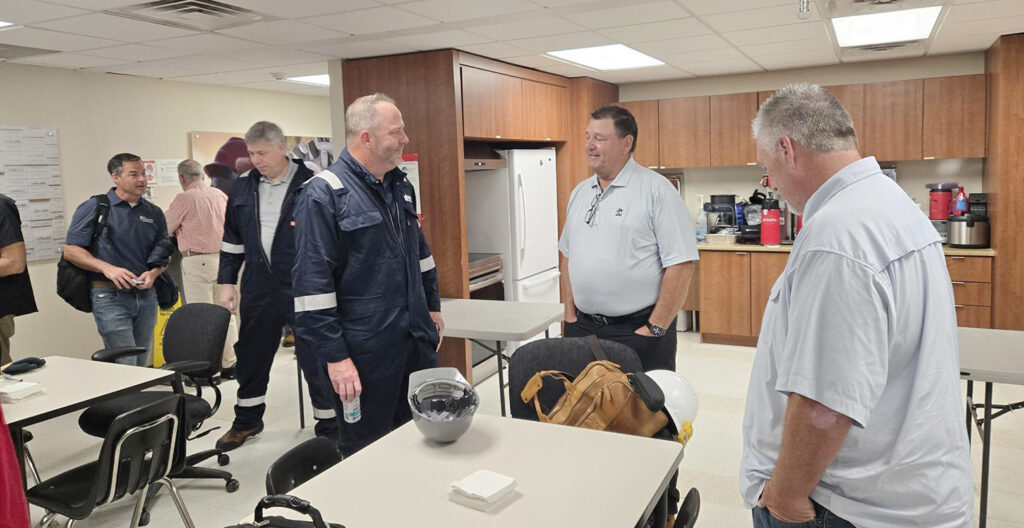
A few weeks later, on September 16, members of Deep Isolation’s Engineering team visited Waste Control Specialists (WCS) in Andrews, Texas. Alongside colleagues from NAC International and Occlusion Nuclear Solutions, we toured WCS’s low-level radioactive waste disposal facility and learned about its equipment, processes, and day-to-day operations. We are working together to deliver the world’s first full-scale, end-to-end demonstration of deep borehole disposal technology, and seeing an operating disposal facility firsthand offered valuable perspective for that work.
The scale of WCS’s operations stood out. Seeing an active low-level waste repository gave us a practical reference for operational concerns and practices that could also inform a future borehole repository. A central reason for the visit was to examine WCS’s shielded transfer system for handling higher-activity components. Seeing it up close and discussing it with WCS staff and our colleagues designing similar systems brought practical considerations into focus – from contamination control and radiation protection to visibility and equipment fit. Those conversations were invaluable as we develop systems for our borehole operations and demonstration.
Walking a site and seeing equipment in person adds a dimension that drawings and photographs on a computer screen cannot provide. With the system in front of us, we can ask experienced operators what works, what does not, and how they have resolved unexpected problems. Those conversations connect engineering designs with the realities of operation. We appreciate Doug’s interest in our work and the WCS team’s generosity in sharing theirs. Both visits reinforced something essential to progress in this field: we move forward by sharing what we know and continuing to learn from those doing the work.
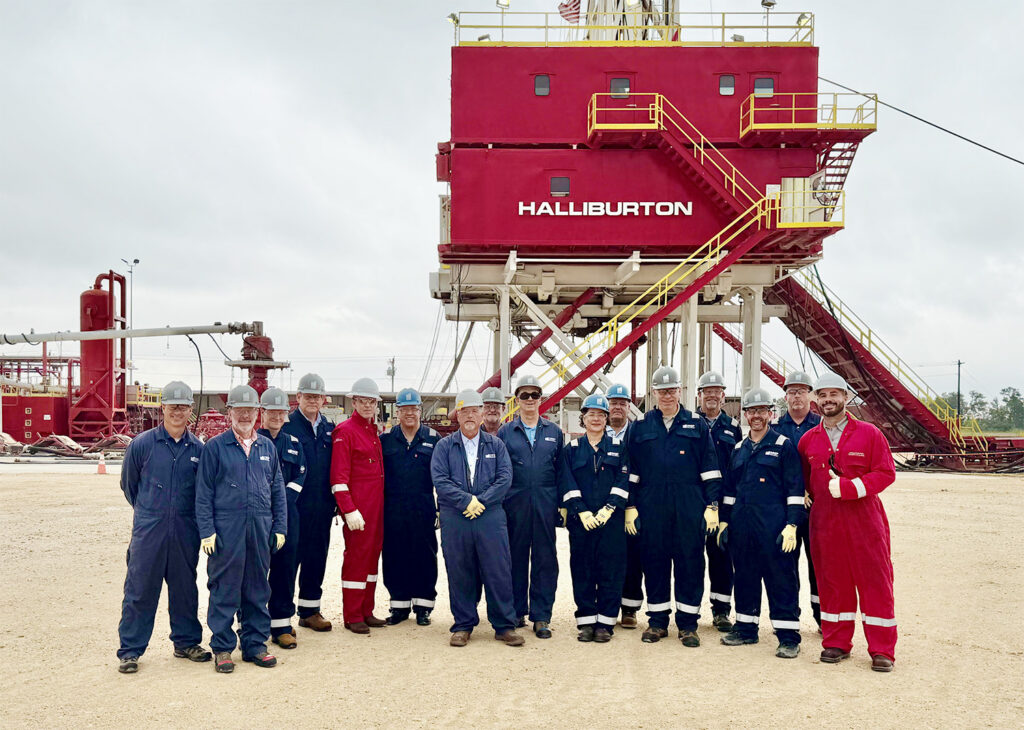
I recently made the trip down to Cameron, Texas to join Rod Baltzer and the Deep Isolation team at the Deep Borehole Demonstration Center, where Deep Isolation and its collaborators are conducting a full-scale, nonradioactive demonstration of the company’s deep borehole disposal technology and Universal Canister System. The purpose was to get a group of industry leaders together and take a hard look at the next steps of a technology that could change how we solve one of the nuclear industry’s biggest problems.
And let me tell you—the collection of people and companies Deep Isolation has assembled is impressive. Folks from very different backgrounds are bringing their experience to the same table to figure out how we safely and permanently deal with nuclear waste. That is no small undertaking.
At the Deep Borehole Demonstration Center near Cameron, TX, July 2026
The trip also brought back a few memories from my oilfield days — some good and some I had probably worked pretty hard to forget. I once swore I would never climb another set of stairs to a doghouse, yet there I was again. It is honest work, though, and there is nothing quite like it. And while the rig felt familiar, we were there for an entirely different purpose: deep borehole disposal.
What stood out most was Deep Isolation’s attention to detail. There is a real process behind every part of this approach. We are bringing together two industries—nuclear and oilfield—that speak different languages, follow different rules, and occasionally believe their way is the only right way.
But that is also what makes this effort special.
The willingness of both sides to listen, learn, and work together has been inspiring—and more than a little educational. Things we take for granted on a rig floor can sound downright complicated to someone who has never been around one. And when you start talking about drilling and steering a horizontal well large enough to safely place these canisters, you realize just how complicated the process can get.
I was also reminded that I need to quit saying we are going to “drop something in the hole.” That is one of those phrases that means something very different depending on which industry you come from. In the oilfield, saying you’re going to drop something downhole could mean something as routine as a traveling valve. In the nuclear business, dropping anything is generally a bad idea. We will be placing these canisters—carefully and precisely.
At the end of the day, this is about combining the best of two industries to solve a problem that has been passed down for years. And now, for the first time, we have a practical solution with the potential to make sure our children and grandchildren are not left holding the bag.
This work also gives us a platform to educate people. Understandably, nobody hears “nuclear waste” and immediately says, “Sure, put that in my backyard.” But when people start to understand the science and engineering behind deep borehole disposal, from how deep the waste is meticulously placed, to how the geology of the host rock supports isolation of the waste, to the safety measures in place, the conversation begins to change.
I left Cameron inspired—by the technology, the people, and the opportunity to help others understand what is being built.
Two industries are coming together, a generational problem is finally meeting a viable solution, and somehow Rod and I, a couple of rural Oklahoma boys, ended up right in the middle of it.
History is going to be made here—and I’m proud to have a front-row seat.
We got busy with our heads down making progress and neglected to celebrate the 10-year anniversary of Deep Isolation.
Deep Isolation was founded on June 13, 2016. I met Liz and Rich Muller that same year when I was CEO of Waste Control Specialists. They came to visit because WCS was the only company that had successfully obtained a new Part 61 license since the Low-Level Radioactive Waste Policy Act was passed. They wanted to learn about stakeholder engagement, licensing, and operations and we discussed it all and took them on a tour of the facility.
I then joined Deep Isolation full time in 2018. At the time, the company had a handful of employees and consultants, a few patents, and about twelve months of cash runway. I had never worked at a startup before, and I certainly knew that nuclear waste disposal isn’t an industry for people looking for quick wins. But the mission was compelling. How often do you get the opportunity to help solve a problem that has challenged the world for more than 70 years?
The reality is that most startups never make it to their tenth birthday. Many don’t survive their first few years. Building a startup is difficult under any circumstances. Building one in the nuclear industry, focused on one of the toughest technical and societal challenges we face, is even harder.
Ten years later, we’re still here—and stronger than ever.
When Deep Isolation started, both the company and deep borehole disposal were viewed as outsiders. We weren’t born out of the traditional nuclear establishment. We came out of Silicon Valley with an unconventional idea: use proven drilling technology to solve one of nuclear energy’s oldest problems. Boreholes were often viewed as a fringe concept rather than a practical disposal solution.
That has changed.
Through years of technical progress, engagement with governments and regulators around the world, and a lot of persistence from our team, deep borehole disposal has become part of the mainstream conversation about the future of nuclear waste disposal. Today it is increasingly recognized as a practical complement to mined repositories, particularly for waste streams that need additional disposal options.
Our technology has grown right alongside that change in perception. We started at Technology Readiness Level 1 with an idea grounded in sound science. Today we’ve advanced to TRL 6, demonstrating the technology in relevant environments and reaching the point where it is ready for licensing. That’s a tremendous amount of progress in just one decade.
Innovation has been a big part of that journey. Deep Isolation filed its first patent application in 2016. Ten years later, we’ve built a portfolio of more than 100 patents, with more still in the pipeline. But we’ve always believed patents are only valuable if they become real engineering.
That’s why we’ve completed small-scale testing at depth, full-scale demonstrations near the surface, pressure testing, corrosion testing, and developed integrated disposal systems, including our Universal Canister System. We’ve steadily reduced technical risk while increasing confidence that this technology can be deployed commercially.
Another milestone I’m particularly proud of is the ecosystem we’ve built around Deep Isolation. We recognized early that solving a global problem wouldn’t mean doing everything ourselves. Instead, we’ve assembled outstanding collaborators—including Amentum, Halliburton, NAC International, and Occlusion Nuclear Solutions—bringing together expertise in drilling, nuclear engineering, transportation, manufacturing, and waste management. That approach allows us to remain a nimble company while having the capability to deploy solutions around the world.
None of this happened because of one idea or one person.
It happened because of the people who believed in the mission and worked every day to move it forward. Current and former employees built the technology, developed the relationships, secured the funding, challenged assumptions, and kept pushing through the inevitable setbacks that every startup faces. They transformed an idea into a company with world-class intellectual property, demonstrated technology, and growing commercial opportunities.
Looking back, I’m incredibly proud of how far we’ve come.
But I’m even more excited about what’s ahead.
The world is embracing nuclear energy in a way we haven’t seen for decades. Governments are recognizing that the back end of the fuel cycle needs innovative solutions, and there is growing momentum in the United States and internationally to finally address the disposition of used nuclear fuel.
After ten years, it feels like we’re just getting started.
To everyone who has been part of this journey—our employees, collaborators, investors, customers, advisors, and supporters—thank you. You’ve helped build something that many people thought wasn’t possible.
I’ve been fortunate to work on nuclear waste disposal for most of my career, and I honestly believe the next ten years will be the most consequential of them all.
7:20 am: My alarm goes off and it’s time to feed the dog.
At this point I’m already awake, cleaned up, dressed, and ready to start my day – the dog wakes me up every day before my alarm goes off, so I take him out for a brief walk and start to get a pre-read on my emails. The Deep Isolation team is dispersed across several time zones, but not many are on the west coast with me. Because of that, I typically receive a handful of emails with project updates, company news, or client feedback well before I start my workday. Checking these on my phone while I’m out with the dog helps me ease into the mindset for work.
7:30 am: I pick up where I left off the day before, working on an economic model.
Dog fed and coffee in hand, I sit at my desk in my home office and unlock my work laptop. A colorful spreadsheet greets me, right where I’d left it the previous afternoon. Deep Isolation has developed a robust cost model for estimating lifecycle costs for the implementation of a deep borehole repository to aid client studies and proposals. We recently received updated cost estimates from our drilling partner to widen the range of configurations we could model, and I have been updating our baseline cost model to account for the new data available. I sip my coffee and get to work updating the formulas that play into the analysis.
8:00 am: I finish the economic model updates and continue with a literature review on environmental and social impact assessments.
As part of one of our international client studies, I’m working on a report deliverable to provide a preliminary environmental and social impact assessment. It’s imperative that a nuclear waste disposal facility has a strong defensible set of analyses that can prove to regulators and the general public that it will perform as designed, and in a safe manner. Part of that includes an analysis of the overall impact that the facility will have on the environment and local population – I get back to reading up on similar studies that have been conducted so that I can better direct the direction of this deliverable.
8:45 am: I need a break from reading environmental impact assessments, so I switch to editing a waste disposal plan.
Deep Isolation works with a number of advanced reactor companies and national laboratory researchers on feasibility studies to assess whether our technology can be a good fit for disposing of their waste forms. I’ve been editing a comprehensive waste disposal plan that’s due to the client in a few months; it lays out repository design considerations, a complete economic assessment, and a preliminary performance and safety assessment. We’ve received extremely helpful consultant feedback on a previous draft of the waste disposal plan, so I verify that the new report incorporates the recommendations in a polished manner.
9:15 am: I receive an email from a collaborator on our demonstration project, and I switch gears once again to assess the contents.
Our team recently broke ground on a full-scale demonstration project, where we will be drilling a borehole to prototypic depth and emplacing/retrieving multiple nuclear waste canisters. The team that will be placing the canisters below ground sent along an initial draft of their procedures for us to review. I read through and add comments and suggested edits to the draft, drawing from my previous knowledge from my time in the Navy executing nuclear procedures. Although the demonstration will be completely non-radioactive, we intend to operate the same way we would in a realistic scenario. Much of my procedural review constitutes ensuring that the nuclear operational controls can fit in with the standard oil and gas techniques applied. Once I finish documenting my recommendations and questions, I let the other team members know that I’m done with my review.
10:00 am: I have a team meeting with external collaborators, so I toss on my headphones and join the meeting.
As a member of a fully remote company working on projects comprised of cross-functional teams, I find that I get the most value from a given time period out of our team video calls – especially for the demonstration project. Our routine team meetings for this project include project managers, engineers, operators, and other team members from Deep Isolation and our collaborating companies. Open communication and spread of ideas is promoted; I take notes, ask questions, make suggestions, and am optimistic about the project outcome.
11:00 am: The meeting is finished and I incorporate some of the discussion takeaways into a functional requirements document I’ve been working on.
A project of this scale requires detailed documented requirements and specifications against which design efforts can be based and program test success can be evaluated. The functional requirements and objectives for our project depend on input from all disciplines on the team, and I get to work changing the wording and content of the document so that we’re set up for success later on.
11:45 am: I step away for a bit to eat some lunch and walk the dog around the neighborhood for a bit of fresh air.
I’ve been on a bit of a bean salad kick recently – drained black beans and chick peas, cherry tomato halves, diced cucumber, pitted kalamata olives, and feta cheese with a olive oil/sherry vinegar/pepperoncini brine/maple syrup dressing. I highly recommend it, it’s easy to meal prep and quite modular!
12:15 pm: Done with lunch, I head back to my desk and check on how my inbox and task-tracking are going.
I check my emails and ensure they’ve all been read, acknowledged, and categorized appropriately. I like to sort all emails into applicable folders and keep the main Inbox only for emails that still require action. This, combined with my physical notebook of tasks and notes helps me to “keep the main thing the main thing” and appropriately prioritize projects and other tasks. In addition, I update a spreadsheet I use for tracking how I spend my time which will make it easier for me to submit my timesheet later in the week.
12:30 pm: I begin research to find published values for radioactive atoms that will remain in one client’s spent nuclear fuel assemblies at the time of disposal.
As part of a study I’m working on for a client, Deep Isolation is contracting out a computational assessment of how safe our borehole repository will be and how well it will perform in that specific area with that specific type of waste form. Different types of nuclear reactors use different designs for their nuclear fuel, and after these reactors operate for decades the residual constituents of these nuclear fuel assemblies vary depending on these different designs. Many types of waste forms have been analyzed in the past to identify what quantities of which radioactive atoms (called radionuclides) remain, and I’m helping to find out what published data exists for the types of fuel our client uses – that way it can be used in the computational models that represent the migration of these radionuclides from where we dispose the waste to the biosphere.
1:30 pm: I send my findings on radionuclide composition to the team member working on the performance model and return to drafting the waste disposal plan I had been working on earlier.
I pull up the draft waste disposal plan report on one of my computer monitors, and on my other monitor I pull up a previously submitted deliverable for the same client and overall project. Because the waste disposal plan is our essentially our final delivery for this project, some information from previous milestones in the project is briefly incorporated into this report and I’d like to ensure that I’m staying true to our findings while I incorporate feedback that was left in the form of comments on the previous draft.
3:15 pm: I change projects one last time for the day and continue researching and drafting the environmental and social impact assessment.
I pick up where I left off early in the morning and review a few additional sources for the preliminary economic and social impact assessment. I’m fairly confident that the information I’ve collated from my literature review is sufficient for me to draw initial qualitative conclusions so I begin drafting the applicable section of the report, citing sources as applicable. Research heavy documentation is a bit more difficult for me to find a working rhythm, but right at the end of my workday I seem to have found my groove. I highlight a few portions of source documentation that I know will help me the next morning, type a few short notes in my draft document that I know will help me regain my train of thought in the morning, and log out of my laptop for the day.
4:00 pm: I change into workout clothes and head to the gym after a productive day.
I hop in my car, head to the gym, and suffer through a little bit of cardio before my evening. Maybe I’ll play some video games with my husband and our college friends, maybe I’ll cook dinner and read a book. Either way, I plan to have an enjoyable evening, get a good night’s sleep, and am excited to take on whatever comes up tomorrow. No two days are the same for me but I look forward to the excitement brought on by the variety, and am driven by my intellectual curiosity and craving for more information and innovation.
While all repository concepts aim to achieve the same outcome, long-term isolation of nuclear waste, the way that isolation is achieved depends strongly on the host rock. Different geologic formations control fluid movement, heat transport, and long-term stability in fundamentally different ways. In Part 1, we focused on the processes that govern subsurface behavior over geologic timescales, including how groundwater moves, how transport occurs, and why depth plays such a critical role.
Building on that foundation, this article looks more directly at how specific rock types achieve isolation. Around the world, disposal programs have converged on a small number of host formations, including crystalline rock, shale and argillite, clay, and salt. Each of these formations provides a viable pathway to long-term containment, but they do so through different mechanisms. Understanding those differences is key to how repositories are designed, how sites are evaluated, and why there is no single universal solution for nuclear waste disposal. These differences become clearer when looking at each rock type individually.
Crystalline rock
Fracture-Controlled
Granite and other crystalline basement rocks are extremely strong and geologically stable, having remained largely unchanged for hundreds of millions of years in many regions. The intact rock matrix is very dense, with extremely low permeability, meaning that fluid movement through the rock itself is minimal. These formations are also typically located in tectonically stable settings, where large-scale deformation occurs slowly over geologic time.
The primary challenge in crystalline systems lies in fractures. Over long timescales, tectonic stresses create networks of cracks that can act as pathways for fluid flow. While the rock matrix remains tight, these fractures can be connected in ways that allow groundwater to move more readily. As a result, transport in crystalline formations is often controlled not by the matrix, but by the presence, connectivity, and hydraulic properties of fracture networks.
Because fracture systems can be complex and variable, understanding their geometry and behavior is central to site evaluation. The safety of a crystalline repository depends on identifying regions where fracture connectivity is limited and groundwater movement remains slow over long timescales.
Despite this challenge, crystalline rock remains one of the most widely used host formations for nuclear waste disposal. Its long-term stability provides confidence that geologic conditions will remain predictable over repository-relevant timescales. The high strength of the rock allows for construction at depth, and the low permeability of the matrix helps limit fluid movement outside of fracture pathways.
Crystalline repository concepts therefore rely on a combination of favorable geology and engineered barriers as part of a multi-barrier system. In Sweden and Finland, for example, spent fuel is placed in copper canisters surrounded by bentonite clay. Even if groundwater moves through fractures and reaches the repository, the engineered system provides an additional layer of protection, limiting radionuclide release and transport.
These systems are also supported by decades of research and site characterization. Extensive field studies in countries such as Sweden and Finland have built a detailed understanding of fracture networks, groundwater flow, and long-term system behavior, providing a strong technical and regulatory foundation for implementation. While crystalline systems are often controlled by fractures, other formations behave very differently.
Shale and Argillite
Diffusion-Dominated
Shale and argillite are fine-grained sedimentary rocks formed from compacted mud and clay. Their most important property for disposal is extremely low permeability. The rock matrix is so tight that groundwater flow is negligible, and fluid movement through the formation is largely suppressed.
As a result, transport in shale systems is dominated by diffusion. Instead of water carrying dissolved material through the rock, radionuclides move slowly through the rock matrix, driven by concentration gradients. In practical terms, this means that a radionuclide released into a shale formation may take hundreds of thousands of years to travel only a few meters. Under these conditions, the geology itself provides the primary barrier to transport, with engineered systems playing a supporting role.
In addition to low permeability, shale formations often exhibit self-sealing behavior. Clay minerals within the rock absorb water and expand when disturbed, gradually reducing the size and connectivity of fractures created during drilling or excavation. This tendency to close fractures over time helps maintain low permeability and reinforces long-term isolation.
The main constraints in shale systems are mechanical and thermal. Compared to crystalline rock, shale is generally weaker and more sensitive to stress changes. It can deform or fracture if not properly managed during construction. Thermal loading from radioactive decay must also be carefully controlled, since elevated temperatures can affect both the mechanical properties of the rock and the stability of the surrounding formation.
Shale and argillite formations are being actively studied as host rocks in several national programs. In Canada, for example, significant research has focused on Ordovician-age shale formations in Ontario, where long-term stability, low permeability, and favorable geochemical conditions are being evaluated for repository development. Clay formations share many similarities with shale, but with one important difference.
Clay Formations
Diffusion-Dominated
Clay formations share many of the same advantages as shale, including very low permeability and diffusion-dominated transport. Fluid movement through the rock matrix is extremely slow, and many radionuclides are further immobilized through chemical interactions with clay minerals, which can bind contaminants and limit their mobility.
What distinguishes clay is its mechanical behavior. Unlike more brittle rocks, clay is plastic, meaning it deforms under stress rather than fracturing. Over time, the material can slowly flow and redistribute itself. As a result, openings created during excavation, whether tunnels, boreholes, or stress-induced fractures, tend to close as the surrounding clay creeps back into place. This self-sealing behavior helps restore low permeability and maintain isolation over long timescales.
These properties make clay particularly well suited to repository concepts that rely heavily on the natural barrier. The combination of low permeability, strong sorption capacity, and self-sealing behavior provides multiple mechanisms that act together to limit radionuclide transport.
The primary constraint in clay formations is thermal. Clay conducts heat relatively poorly, so heat generated by radioactive decay can accumulate in the surrounding rock. Elevated temperatures can affect both the mechanical properties of the clay and the stability of the engineered system. Repository designs must therefore manage thermal loading carefully, often by increasing spacing between waste packages or allowing waste to cool prior to emplacement.
Clay formations are being actively pursued as host rocks in several national programs. In Belgium, research has focused on the Boom Clay formation, while in France, the Callovo-Oxfordian clay is the basis for the Cigéo repository. Both programs have conducted extensive underground research over multiple decades to characterize the long-term behavior of these systems. Salt represents a fundamentally different end-member in how isolation is achieved.
Salt
Deformation-Dominated
Salt formations are in many ways the most distinctive of the major host rock options. In their intact state, they have extremely low permeability and essentially no connected pore space, meaning there are no continuous pathways for fluid flow. As a result, fluid movement through undisturbed salt is negligible.
What sets salt apart is its mechanical behavior. Under the pressures found at depth, salt deforms continuously over time through a process known as creep. Rather than remaining rigid or fracturing, the rock flows slowly and plastically, redistributing stress and closing any voids that are created. Openings formed during excavation or drilling begin to close almost immediately as the surrounding salt moves inward. Over decades to centuries, this process can encapsulate waste, isolating it within the formation as the salt gradually seals around it.
This behavior provides a powerful containment mechanism. In salt-based repositories, isolation is achieved not only through low permeability, but through the physical closure of the formation itself. The Waste Isolation Pilot Plant (WIPP) in New Mexico is a well-known example of this approach. Operating since 1999, it relies on the long-term creep of salt to isolate transuranic waste by gradually sealing disposal rooms and limiting fluid movement.
The primary complication in salt formations is the presence of brine. Although salt is often described as dry, small pockets of highly saline fluid can exist within the formation. Heat generated by radioactive waste can mobilize this brine, causing it to migrate toward disposal zones. This behavior must be carefully considered in repository design, particularly in selecting canister materials and managing thermal loading.
Salt’s creep behavior can also introduce engineering challenges. While closure is beneficial for long-term isolation, it can complicate operations during emplacement and sealing. In borehole-based concepts, for example, the tendency of salt to deform and close around installed components must be accounted for in both design and installation strategy. While each host rock relies on different mechanisms, the key differences become clearer when viewed side by side.
How they compare
While each host rock relies on different mechanisms, the underlying goal is the same: limit fluid movement and ensure that any radionuclide transport occurs slowly enough to meet long-term safety objectives. The table below summarizes how each formation achieves this.
Rock Type
How Isolation Works
Key Advantages
Main Constraint
Where It’s Being Used
Crystalline
Limiting fracture flow + engineered barriers
High strength, long-term geologic stability, extensive experience
Fracture uncertainty
Sweden, Finland, Canada
Shale / argillite
Diffusion through tight matrix
Extremely slow transport, geology carries safety function
Every rock type described here has been selected by at least one national disposal program, and for good reason. Each provides a credible, defensible pathway to long-term isolation. The difference lies in how that isolation is achieved.
In crystalline formations, repository designs account for fracture-controlled flow by combining stable host rock with robust engineered barriers. In shale and clay systems, extremely low permeability and diffusion-dominated transport allow the geology itself to carry much of the safety function. In salt, isolation is achieved through both low permeability and creep-driven closure, which gradually encapsulates the waste within the formation.
The appropriate choice for a given country or site depends on several factors, including the available geology, the characteristics of the waste, and the overall repository design. Whether waste is emplaced in mined tunnels or deep boreholes, the underlying principle remains the same: the disposal system should align with, and reinforce, the natural behavior of the host rock.
What is consistent across all these approaches is the underlying logic. Effective repository design does not attempt to overcome the geology, but to work with it. Over geologic timescales, the most durable component of any repository is not the engineered barrier system, but the formation that surrounds it. This reflects the same principle introduced in Part 1: long-term repository performance depends on how engineered systems and geology work together, with the host rock providing the foundation for isolation over geologic timescales.
The geology of a repository isn’t just a backdrop; it’s doing most of the work. Here’s how different geologic conditions control the long-term isolation of nuclear waste.
When people think about nuclear waste disposal, they often focus on engineered barriers: thick metal canisters, layers of sealing materials, and complex closure systems. These components are critical for early system performance. But when we consider what the system must do over 100,000 to a million years (i.e., geologic timescales), the focus shifts. Ultimately, it’s the host rock that carries the burden of long-term performance.
Rock formations are not static — they evolve over time under the influence of stress, temperature, fluid movement, and chemical reactions. Minerals dissolve and re-precipitate, fractures can open or gradually seal, and in some formations the rock itself deforms or flows. These processes occur slowly, but over geologic timescales they control how fluids move and how permeability changes at depth. The goal isn’t to find a formation that never changes, but one that evolves in predictable ways that can be understood and modeled.
This is why host rock selection is one of the most consequential decisions in repository design. Over hundreds of thousands to millions of years, it is the geologic system that ultimately ensures isolation. Engineered components play an important role, but they function in support of the natural system.
Key Properties of Geologic Formations
Before discussing the different host rock types (blog 2 of this series), it’s important to first provide an overview of the key geologic parameters that describe the physical and chemical properties of a system, and ultimately its suitability for waste disposal. These parameters control how fluids move, how heat is transported, and how the system responds to long-term changes. While different rock types express these properties in different ways, the underlying metrics are consistent across all repository concepts.
Property
What It Describes
Why It Matters for Disposal
Porosity
Fraction of void space in the rock
Determines fluid storage and influences diffusion pathways
Thermal conductivity
Ability to conduct heat
Governs how heat from radioactive decay dissipates into the surrounding rock
Diffusivity (effective)
Rate of molecular transport through the rock matrix
Controls radionuclide migration in low-permeability systems
Hydraulic gradient
Driving force for groundwater flow
Determines direction and magnitude of fluid movement
Fracture density / connectivity
Presence and linkage of cracks in the rock
Can dominate flow pathways even in otherwise low-permeability formations
Geochemical conditions
Fluid composition, pH, redox state
Influences radionuclide solubility, sorption, and long-term mobility
Mechanical properties (strength, creep)
How rock responds to stress
Affects fracture formation, sealing behavior, and long-term stability
Salinity / fluid density
Dissolved solids in groundwater
Can stabilize deep systems and suppress buoyancy-driven flow
The table above summarizes the key properties used to describe geologic formations in the context of nuclear waste disposal. Each of these parameters represents a different aspect of how the subsurface system behaves, from how fluids move, to how heat is transferred, to how the rock responds to long-term stress. No single property determines whether a formation is suitable for disposal. Instead, it is the combination of these factors and how they evolve over time, that defines system behavior. For example, a rock may have low matrix permeability but still allow faster transport if fractures are well connected. Conversely, formations with higher porosity but strong geochemical retention or self-sealing behavior can still provide effective isolation. Understanding how these properties interact is central to evaluating and comparing different host rock types.
What Is the Rock Actually Trying to Do?
At the most basic level, a host rock must prevent radioactive material from migrating through the subsurface and reaching drinking water, the surface, or anything living. The objective of nuclear waste disposal is long-term safety, specifically limiting the movement of radionuclides so they cannot be transported by groundwater.
This leads to a central question: how does a given rock formation control fluid movement?
There are two primary modes. In some rocks, fluids move mainly through fractures, cracks in the rock that act as pathways for flow. In others, the rock matrix is so tight that fracture flow is minimal, and transport occurs primarily by diffusion, where molecules spread slowly through the rock. The difference in timescales between these two modes is substantial. Fracture flow can move material relatively quickly, while diffusion through dense rock may take hundreds of thousands of years for radionuclides to travel only a few meters.
The goal is not to eliminate movement entirely, but to slow it enough that radionuclides decay before they can travel meaningful distances.
A second important factor is how the rock responds to disturbance. Drilling or excavating a repository inevitably alters the surrounding formation, creating fractures, redistributing stress, and changing permeability. Some rocks can gradually heal this damage over time, either by swelling or by deforming and closing fractures. These self-sealing behaviors can significantly enhance long-term isolation compared to rocks that remain fractured once disturbed. The way these processes play out in practice is strongly influenced by depth.
The Role of Depth
At greater depths, typically kilometers below the surface, groundwater systems begin to behave very differently from what we experience near the surface. The weight of overlying rock increases pressure, temperatures rise due to the Earth’s natural geothermal gradient, and water becomes more saline as it interacts with minerals over long periods of time. These changes affect how water moves. Higher pressures compress pore spaces, reducing permeability, while increased salinity makes the water denser. In many cases, this creates layered systems where denser fluids remain trapped below lighter ones, limiting vertical movement.
As a result, groundwater flow at depth is often much slower and more isolated than near the surface, where rainfall and rivers continuously drive circulation. In deep formations, there may be little to no connection to these surface-driven flow systems. Instead of water actively moving through the rock, transport can be dominated by diffusion, the slow spreading of dissolved substances through the rock matrix. Under these conditions, it can take tens or hundreds of thousands of years for dissolved material to move even short distances.
In some formations, particularly those with very low permeability, these factors combine to create environments that are nearly stagnant. Fluid movement is minimal, and the system is effectively isolated from the surface. This is one of the key reasons deep geologic environments are considered favorable for long-term containment.
Depth is therefore not just a geometric parameter; it directly influences the mechanical, hydraulic, and chemical processes that control subsurface behavior. Elevated pressures affect stress and fracture stability, temperature influences reaction rates and fluid properties, and increased salinity can suppress buoyancy-driven flow. Together, these factors determine how permeability evolves and how fluids, along with any dissolved contaminants, can move over time.
Whether waste is accessed through mined tunnels or deep boreholes, placing it far below the surface situates it within a part of the subsurface where natural conditions are inherently more favorable for long-term containment.
Geology and Long-Term Isolation
Taken together, these processes highlight a central idea: the long-term safety of a repository is ultimately controlled by the natural behavior of the geologic system. Fluid movement, transport mechanisms, and the response of the rock to stress and temperature all work together to determine how effectively waste is isolated over time. The goal is not to engineer a system that overcomes the geology, but to place waste in a setting where the geology itself provides a strong and predictable barrier.
In Part 2, we build on this foundation by looking at how different types of rock formations, including crystalline rock, shale and argillite, clay, and salt, achieve isolation in different ways, and how those differences shape repository design.
The resurgence of nuclear power, driven in part by the growing demand for power industries like AI data centers, has once again brought to the forefront the question: What do we do with the nuclear waste? As detailed in a recent Wall Street Journal article, nuclear energy is an important part of the U.S. energy landscape, with nuclear reactors continuing to provide almost 20% of U.S. electricity and producing about 2,000 metric tons of waste each year.
Currently, more than 90,000 metric tons of nuclear waste sit in temporary storage across 39 states, including spent fuel pools and dry casks. These storage solutions were never intended to be permanent, and the failure to create a permanent geological repository has already cost taxpayers billions. Without a permanent disposal solution, the viability of the nuclear expansion needed for economic and strategic leadership is at risk.
The urgency of this issue is underscored by the recent deliberations of the U.S. Supreme Court concerning the Nuclear Regulatory Commission’s (NRC) authority to license temporary off-site nuclear waste storage facilities. As reported by Reuters, earlier in March, the justices heard arguments in a case challenging the NRC’s licensing of a facility in western Texas. The outcome of this case could have significant implications for the future of nuclear waste storage in the U.S.
It’s clear that the U.S. needs to address the waste issue. Resolving this challenge is crucial for public confidence, environmental safety, and the long-term success of America’s nuclear renaissance. Without action, nuclear growth will stall, and the U.S. will cede leadership in the sector to global competitors.
As the Wall Street Journal article notes, other countries like Finland, France, and Canada are progressing with deep geological repositories to store nuclear waste safely and permanently. Finland’s Onkalo repository, set to open in 2026, is already considered the world’s first permanent waste disposal solution for spent nuclear fuel. In contrast, the U.S. remains stalled, unable to move forward with long-term disposal plans since the Yucca Mountain repository effort was halted in 2008. Even consolidated interim storage has been delayed by legal challenges stemming from a lack of disposal sites. The reality is that temporary storage only delays the inevitable and we need a permanent solution for spent nuclear fuel that can safely contain it for generations.
That’s where Deep Isolation comes in. As a first-of-its-kind company committed to finding sustainable, safe, and permanent solutions to nuclear waste, we’ve developed a deep borehole disposal method that safely isolates spent nuclear fuel deep underground, which can be adapted to work in a number of different geological settings. Unlike conventional repositories that require excavating large tunnels in a mine, Deep Isolation’s approach leverages directional drilling technology to place waste approximately a thousand meters or more underground within stable geological formations. These deep borehole repositories can provide substantial isolation for many types of high-level radiological waste in a wide range of locations. Because it can be implemented modularly, it is well suited for smaller inventories of waste or as a complement to an existing repository.
This innovative approach has gained traction globally. Deep Isolation has formed partnerships with governments and organizations in the U.K., Europe, and the U.S. to advance feasibility studies and prototype development. Our Universal Canister System (UCS) is designed for the safe storage, transport and disposal of spent nuclear fuel from advanced reactors. Once encapsulated in a UCS, the spent fuel from any advanced reactor will be both safe and future-proofed – that is, ready for any option the waste owner may choose in the future: long-term storage, disposal in a mined geological disposal facility or disposal in a deep borehole repository.
By working with international regulators and nuclear agencies, Deep Isolation is proving that deep borehole disposal is not just a theoretical concept – it’s a practical, deployable solution that could be implemented in the near future. The technology has been rigorously tested, and our approach offers a proven, long-term solution that can be implemented faster and more affordably than traditional geological repositories.
It is time for the U.S. to take the lead and embrace innovative solutions like deep borehole disposal. We can’t afford to keep deferring action, hoping that future generations will solve the problem. We need political will and public trust to make this a reality.
As we continue to push for permanent nuclear waste storage solutions, we urge policymakers to prioritize the future of energy and environmental safety over political gridlock. Let’s work together to ensure that the nation’s spent nuclear fuel and high-level radioactive waste management offers safe, viable, cost-efficient options for the generations to come.
In 2022 the world saw a notable uptick in the number of countries pursuing clean nuclear energy to fight climate change and secure energy independence. In turn, more governments and next generation nuclear developers are thinking about the back end of the fuel cycle while evaluating deployment of reactors.
Among the more than a dozen contracts Deep Isolation has across three continents, our advanced reactor and small modular reactor waste disposal work includes:
*Participation in four U.S. Department of Energy (DOE) Advanced Research Projects Agency – Energy (ARPA-E) grant projects with three led by partner organizations. Deep Isolation’s scope will be to examine various aspects of how deep borehole repositories for nuclear waste can help close the nuclear fuel cycle through disposal of spent fuel and reprocessing waste streams. The total grant funding for these projects is $15.3 million, representing a significant investment from the U.S. government in support of an integrated waste management approach.
*A second contract with Fermi Energia, an energy company working on the development and deployment of small module reactors (SMRs) in Estonia. This work will build on Deep Isolation’s earlier work with Fermi Energia, a project that concluded that most of the country’s geology would be acceptable for deep borehole disposal. This new project will research the cost effectiveness of using boreholes to dispose of waste from an SMR that would be deployed in Estonia by 2050.
Deep Isolation Head of Engineering Jesse Sloane, who is overseeing the company’s DOE grant work, funded under the ARPA-E umbrella, explains this synergy between advanced nuclear reactors and deep borehole repositories.
The U.S. Department of Energy’s Advanced Research Projects Agency — Energy helps fund R&D for nuclear energy and nuclear waste disposal projects such as deep boreholes repositories.
Q. We are clearly seeing more interest from the next generation nuclear reactor community in deep boreholes over the past year. What is the primary driver of this heightened consideration?
A. There are many factors contributing to the advancement of deep borehole disposal, and I think it is hard to narrow it down to only one. We are certainly seeing worldwide drivers such as the geopolitical environment and climate change concerns play key roles in the desire to find near-term solutions to the nuclear waste problem in support of carbon-neutral nuclear energy.
In the European Union, there are changes in taxonomy regulations to support investment in sustainable advanced nuclear technologies, and in the case of climate change mitigation, these are coupled with requirements to have plans for an operational disposal facility for high-level waste by 2050. From a technical perspective, I think deep borehole disposal repository facilities are uniquely poised to be designed, licensed, constructed, and operational within that timeframe. Borehole repositories require far less construction time than the traditional mined repositories, given they are smaller in scale, can be modular in design, and do not require workers to be underground.
In the United States, utilities that deploy advanced reactors will be required to fund the storage of the spent fuel for up to 20 years after it has been removed from the reactor. This is a significant policy change from what is required for the existing fleet of reactors — for which the DOE is responsible for providing waste disposal services as of 1998 and is currently paying the utilities for spent fuel storage costs. Therefore, the industry seems keen to see progress in the form of innovative waste disposal technologies, including deep borehole disposal.
Q. Of the four DOE projects, Deep Isolation is the lead on one, a $3.6 million grant in partnership with the University of California, Berkeley, Lawrence Berkeley National Laboratory and NAC International, to develop a universal canister system for advanced reactor waste streams. What are some key aspects of this project, and how does it fit into the broader picture of how deep boreholes can support advanced reactor deployments?
A. This project is funded through ARPA-E’s Optimizing Nuclear Waste and Advanced Reactor Disposal Systems (ONWARDS) program, and it specifically addresses consideration of deep borehole disposal as an alternative disposal pathway for advanced reactor waste.
There are four key parts for this project: 1.) The project team will research various advanced reactor waste forms through literature reviews, experimentation, and collaboration with other ARPA-E projects. 2.) These waste forms will be analyzed through repository performance assessments in a variety of geologic disposal configurations, including mined and borehole repositories. 3.) We will design and analyze a disposal canister that will be compatible with these waste forms and will be appropriately sized for disposal in a borehole or mined repository. The design efforts will culminate with the fabrication of a prototype canister. 4.) We will develop generic waste acceptance criteria for waste forms to be packaged in the new canister, with differing criteria for disposal in both mined and borehole repository configurations.
The project will provide a pathway for disposal of multiple waste forms for advanced reactor designs that have not yet been built or licensed so that a disposal pathway is identified prior to the reactors even coming online. Future analyses can confirm if additional waste forms will be acceptable for disposal within the canister, which will allow these reactor designs to mature and progress while simultaneously planning for eventual disposal of the spent fuel.
Q. You are Deep Isolation’s Project Lead on a team that was recently selected to receive $4.9 million from the DOE ARPA-E CURIE program. The project, led by Argonne National Laboratory, is to develop and demonstrate oxide reductiontechnology for pyrochemical recycling of light water reactor used nuclear fuel. Deep Isolation will develop an integrated oxide reduction waste disposal plan, while simultaneously determining ideal waste acceptance parameters. Please explain the significance of this project.
A. ARPA-E’s CURIE program aims to significantly reduce the volume of light water reactor spent nuclear fuel requiring disposal by advancing various reprocessing technologies for ultimate commercial applicability. We are partnering with Argonne National Laboratory, advanced reactor developer Oklo Inc., and Case Western Reserve University to advance oxide reduction reprocessing technology to maximize recovery of fissionable material from the existing inventory of spent nuclear fuel. Reprocessing, whether through oxide reduction or some other means, will always result in waste forms that must be safely isolated and disposed of deep underground to protect the public from the harmful radiation emanating from those waste products. This isolation is necessary because the waste, similar to spent nuclear fuel, contains isotopes with long half-lives (hundreds to thousands of years) that emit harmful radiation.
Deep Isolation will develop a disposal plan for the oxide reduction process waste streams. It is worth mentioning that the CURIE program has some ambitious target metrics, including a goal to maintain disposal costs in the range of 0.1¢/kWh. To reduce disposal costs, Deep Isolation will also perform an economic analysis to determine an ideal range of acceptance parameters for those waste streams. This will ensure that reprocessing technology is not only safe but economical and able to support the needs of the coming fleet of advanced reactors.
Q. In addition to the Argonne project you just discussed, describe Deep Isolation’s two other ARPA-E projects: An ONWARDS project with Oklo, Argonne National Lab and Idaho National Laboratory and a second CURIE project led by EPRI.
A. The ONWARDS project led by Oklo will develop a first-of-a-kind nuclear fuel recycling facility. The project will advance the technical and commercial capabilities of an electrorefining facility to be deployed in support of metal-fueled advanced reactors. Deep Isolation’s scope for the project will analyze the pyroprocessing waste streams to determine if they are suitable for deep borehole disposal. We will also develop an integrated waste disposal plan for the project’s waste streams.
We are also fortunate to be part of another CURIE project, led by EPRI. This project, which includes an advanced reactor company, Oak Ridge National Laboratory, Southern Company, and Dominion Engineering, will develop a complete advanced reactor fuel cycle enterprise. The project will consider the use of light water reactor spent nuclear fuel as feedstock, explore optimization of various recycling processes, and will integrate with Deep Isolation’s innovative approach to efficient waste management through deep borehole disposal.
The rapid growth of nuclear start-ups in the past two decades indicates the changing nuclear industry: an industry in need of innovation. This industry needs fresh perspectives from professionals excited to engage with nuclear technology, especially in the face of the global challenge of climate change.
The nuclear start-up life was the topic of a panel I joined recently at the Nuclear Innovation Bootcamp (NIB) in Madison, Wisconsin. Also participating were Tyler Bernstein of Zeno Power Systems, Alexia Mercier of OECD Nuclear Energy Agency, and Andy Morales of FireHydrant. We delved into the intersection of nuclear technology, innovation, and team building in the start-up space. Most of the questions we received from the Bootcamp attendees focused on how to not only succeed in the nuclear start-up space but thrive. Let’s discuss that.
What does success look like in the nuclear industry? Success looks like the further deployment of nuclear energy technology to fight climate change, continued use of nuclear material for medical purposes, and future innovation in the nuclear industry.
So how do we get there and what changes to how we approach nuclear innovation will be needed to find this success? Based on the NIB panel discussion, it seems that young professionals believe new reactor designs are key to the future success of nuclear energy. It does make sense that young industry professionals who may be unfamiliar with the complex history of nuclear power would focus on the technical aspects of nuclear. But forgoing the industry’s history misses a key opportunity for growth: to find success in the nuclear industry, especially with innovation, we need to learn from the industry’s past, especially as it pertains to its engagement with the public.
Success for the next generation of nuclear professionals must:
Listen. Learn. Adapt.
We can pull a great example of this from my co-panelist, Tyler Bernstein of Zeno Power Systems who said, “Something I believe we’ve done well as we’ve grown our team is balancing bringing onboard team members with decades of experience with industry newcomers — who are frequently non-nuclear engineers. We’ve seen this combination work well as those who have more experience can impart wisdom on how things have been in the past, while industry newcomers bring fresh and creative ideas to the table. In fact, our founding team is comprised wholly of newcomers to the nuclear industry; I believe a good part of our success to date is a result of my co-founders and I coming together with new perspectives on old problems.”
Recruiting a diverse team is part of creating a culture where different stakeholders are listened to in a constructive and meaningful way. A diverse team provides an organization with the ability to approach conversations from different perspectives. Many of the attendees at NIB are in the process of starting their own nuclear startups. To empower their success, we must also empower young professionals to build teams diverse in expertise, backgrounds, age, and race.
There is so much work to be done to prepare young professionals for the complex nuclear industry, but by questioning the traditions of the nuclear industry of the past, we can learn and change to find success in the future.
A final thank you is deserved by the organizers of the 2022 Nuclear Innovation Bootcamp, especially River Bennett of Nuclear Innovation Alliance, the panel’s moderator for the panel. It is programs such as NIB that provide much-needed resources to the young generation of the nuclear inclusive clean energy future.
Deep Isolation Director of Systems Engineering Dr. Ethan Bates presented his paper, co-authored with borehole sciences expert John Midgley, titled Features, Events, and Processes Prioritization for Deep Borehole Disposal Concepts in Crystalline Rock and Shale, at the American Nuclear Society Meeting in Anaheim, Calif., earlier this month.
We sat down with Dr. Bates to learn more about these analyses.
Q: What are FEPs? Why are they relevant to the safety analysis of nuclear waste disposal?
FEPs stands for “features, events, and processes” and studying this allows us to categorize phenomena affecting nuclear waste repository performance. Specifically, events and processes impact the features of the repository, and a screening process is needed to evaluate which of these is important to safety in the long run. This paper generally addresses FEPs for borehole concepts that Deep Isolation (and other institutions) are considering and prioritizes a subset of FEP groups to guide future collaborations. This is to support the safety and feasibility evaluation of deep borehole concepts in a wider range of geologies, including crystalline rock and shale.
Q: What was your motivation for prioritizing features, events, and processes in deep borehole disposal concepts in crystalline rock and shale?
Modern drilling technologies broaden our options for nuclear waste disposal to a wider range of sites, geological environments, depths, and configurations. In the past, researchers (including myself) focused on crystalline rock as the host rock, but Deep Isolation has shown that equally safe repositories could be constructed in shale using horizontal drilling. This option could be very helpful in the siting process (which can be challenging) but it increases the scope of work required in the early stages of designing borehole repositories.
To perform a comprehensive evaluation of the safety of a deep borehole repository, we need to analyze all the phenomena, initiating events, and boundary conditions affecting deep borehole repositories over 10,000 years or more. With limited resources, it’s important to focus our efforts on the FEPs that are assessed to be of greater importance.
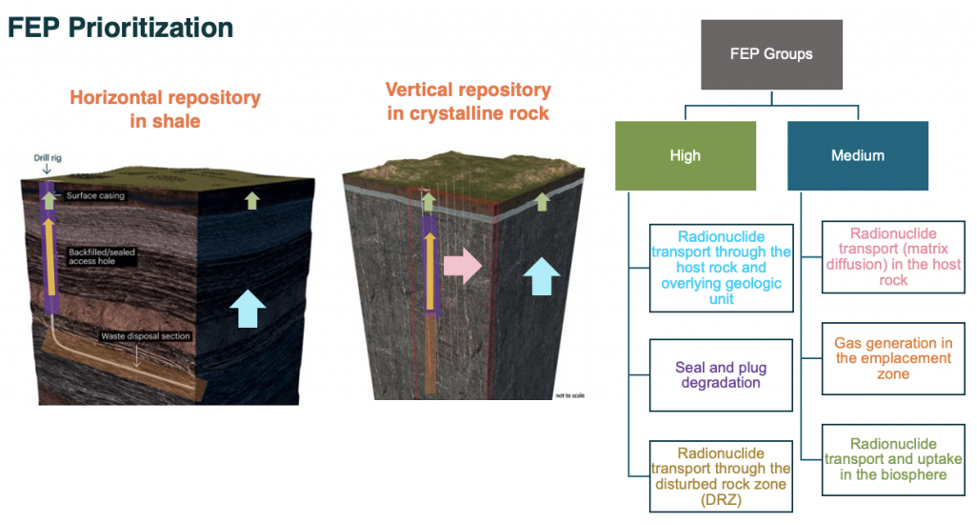
This graphic shows some of the FEP groups that our paper studied for a horizontal repository in shale and a vertical repository in crystalline rock.
Q: What are the high-priority FEPs, and how were they determined?
To streamline the prioritization process, a smaller subset of FEP groups was created. Then, an expert panel (including those from a leading national laboratory) was convened to assess the relative importance of the FEP groups. The FEP group related to radionuclide transport through the host rock barrier, which varies with depth, was deemed high-priority because in the deep borehole disposal concept this barrier strongly impacts the safety of the repository. Ultimately, three high-priority FEP groups were identified:
radionuclide transport through the host rock and overlying geologic units;
seal and plug degradation; and
radionuclide transport through the disturbed rock zone.
Further evaluation of these FEPs will advance the generic feasibility and safety assessment of deep borehole disposal concepts.
Q: What are the big takeaways from this work?
Early findings on the high priority FEP group related to host rock transport properties show that deep borehole disposal enables wider access to host rocks where diffusion of radionuclides (extremely slow and predictable, relative to advection) is the dominant transport mechanism. Imagine having a sugar cube at the bottom of a glass of water: With diffusion, the water is not moving and it takes a very long time for the sugar to dissolve into the water. Having advection is equivalent to stirring the glass and allows for much more rapid transport of the sugar.
Q: What are the next steps?
High- and medium-priority FEPs were identified in this paper to better understand the long-term performance assessment of deep boreholes for nuclear waste disposal. Although a preliminary analysis was conducted on the high-priority FEP group related to host rock properties, additional work is needed to draw general correlations about the depth variation of clay properties. Future work on the other high priority FEP groups such as transport through the disturbed rock zone and seal and plug degradation might eventually show these FEPs to have a lower significance in the safety case than initially thought, for example, by showing that the repository performs safely even when these features and barriers are conservatively assumed to be degraded. Additional efforts will also go toward the medium priority FEPs such as gas generation in the emplacement zone, transport and dilution in the biosphere, and matrix diffusion, which can act as an important delay mechanism in crystalline rock.