
Deep Isolation Launches Full-Scale Demonstration Program for Nuclear Waste Disposal

Groundbreaking Event officially kicks off deep borehole demonstration program, the first full-scale, at depth test of technology for safely and permanently disposing of nuclear waste deep underground
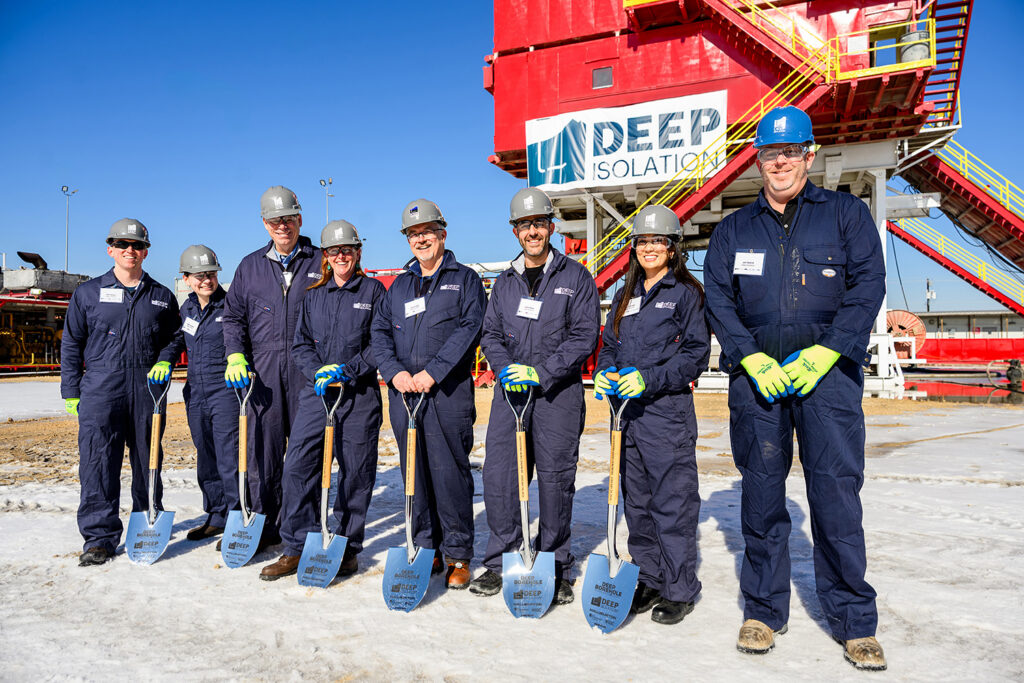
Deep Isolation team at groundbreaking ceremony

Deep Isolation Nuclear, Inc. (“Deep Isolation”), a leading innovator in nuclear waste disposal technology, today announced the launch of its multi-year, full-scale, at-depth deep borehole demonstration program (the “Demonstration Program”), in collaboration with the Deep Borehole Demonstration Center (“DBDC”), Halliburton (NYSE: HAL), Amentum (NYSE: AMTM), NAC International, and Occlusion Nuclear Solutions, to conduct testing of its deep borehole technology for safely and permanently disposing of nuclear waste.

Deep Isolation, in collaboration with Halliburton and the DBDC, hosted a Groundbreaking Event to officially launch the Demonstration Program on January 28, 2026. The event, held at the Deep Borehole Demonstration Center facility, located at the Halliburton Drilling Technology Facility near Cameron, Texas, brought together project partners and key stakeholders from across the nuclear industry, the U.S. Department of Energy, and officials from the State of Texas, Milam County, and City of Cameron.

The Groundbreaking Event marked the beginning of this critical demonstration project, which is aimed at building stakeholder and regulatory confidence in the Company’s deep borehole disposal technology. The Demonstration Program, which does not utilize radioactive material, will provide crucial data and operational experience to further the commercialization strategy for Deep Isolation’s deep borehole disposal technology.
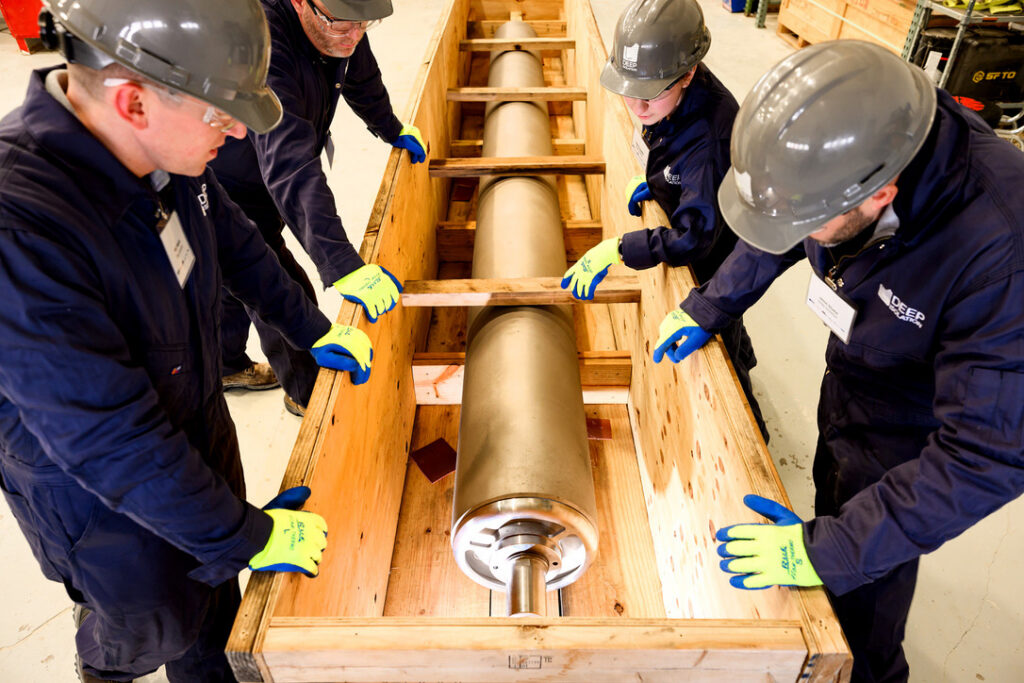
Unboxing the universal canister system at groundbreaking ceremony

“The groundbreaking marks the start of a historic program that will allow us to advance on the path to the commercialization of our deep borehole disposal technology and Universal Canister System,” said Rod Baltzer, Deep Isolation’s President and CEO. “We are thrilled to have brought together this extensive collaboration of leading organizations in nuclear technology, drilling services, and waste management to address one of the nuclear industry’s most pressing challenges: developing a safe and permanent solution for nuclear waste disposal. We believe our technology, once commercialized, has the potential to revolutionize the nuclear industry with a long-term solution for disposing of spent nuclear fuel.”

“We value our collaboration with Deep Isolation on this important initiative,” said Duane Sherritt, vice president of Low Carbon Solutions for Halliburton. “Together with Deep Isolation and other collaborators, we will show how directional drilling plays a critical role in delivering subsurface storage locations.”

Deep Isolation’s nuclear waste disposal technology is being designed to leverage directional drilling to isolate spent nuclear fuel and high-level radioactive waste in deep boreholes located underground in suitable rock formations. Deep Isolation believes that directional borehole disposal could provide robust and deep isolation for many types of radioactive waste, provide flexibility in repository siting, as well as allow for modular implementation adaptable to specific waste management programs and inventories.

Deep Isolation’s Universal Canister System will be utilized in the Demonstration Program, has been extensively tested, and is engineered to contain various types of spent fuel and high-level radioactive waste from legacy and advanced reactors for long-term storage, transportation, and disposal.

About Deep Isolation

Deep Isolation is the first company to undertake development of technologies for nuclear waste disposal in deep boreholes. When commercialized Deep Isolation’s solution will offer a uniquely tailored solution to help countries identify, plan for and complete the necessary steps to dispose of their nuclear waste inventories. With 91 patents issued to date, Deep Isolation’s technology is being designed to leverage proven drilling practices to allow safe isolation of waste deep underground in horizontal, vertical, or slanted borehole repositories. Deep Isolation’s Universal Canister System was developed through a three-year project funded by the U.S. Department of Energy’s Advanced Research Projects Agency—Energy and is engineered to support integrated management of spent fuel and high-level waste from advanced reactors across storage, transportation and eventual disposal.

###

For more information, visit: deepisolation.com 

Media Contact:
Sophie McCallum
media@deepisolation.com

Investor Contact:
Caldwell Bailey
InvestorRelations@deepisolation.com

Forward-Looking Statements

Statements contained in this news release that are not historical facts are “forward-looking information” or “forward-looking statements” (collectively, “forward-looking statements”) within the meaning of Section 27A of the Securities Act and Section 21E of the Securities Exchange Act of 1934, as amended. Forward-looking statements include, but are not limited to, statements regarding our plans, objectives and expectations for our business, the future growth of our business and the nuclear energy and nuclear waste disposal industries as a whole, and future benefits expected to arise from our strategic partnerships. In certain cases, forward-looking statements can be identified by the use of words and phrases or variations of words and phrases or statements such as “may,” “should,” “expect,” “intend,” “plan,” “anticipate,” “believe,” “estimate,” “predict,” “will,” “could,” “project,” “target,” “potential,” “continue” and similar expressions. Forward-looking statements are based on management’s belief and assumptions, including current expectations and projections about future events and trends, and on information currently available to management.

Forward-looking statements in this or any other news release are subject to a number of risks, uncertainties, and assumptions that could cause actual results to be materially different from those expressed or implied by such forward-looking statements. Such risks, uncertainties, and assumptions are subject to a number of factors, including, among others: the failure of a market to develop for our deep borehole disposal solutions as quickly as we expect or at all; a failure of demand for our solution to develop sufficiently; regulatory and legal developments, including issues relating to obtaining regulatory approvals or permissions on the timelines we expect or at all; our lack of profitability; delays or failure in our initiative to complete a full-scale, at-depth demonstration of our Universal Canister System and our deep borehole solution; our failure to enter into contracts with customers or, once we do enter into contracts, to continue such contractual relationships or to receive new contract awards; our dependency on governmental contracts and awards; our  failure to manage our growth effectively or to execute our business plan; a failure to sustain and expand relationships with governmental entities and strategic partners; failure in the assumptions or analyses we have used in supporting forecasts or plans; our inability to commercialize our products at scale; the development or deployment of other technologies or solutions supplanting or competing with our technologies; challenges to our intellectual property; failures to protect, maintain, enforce, and enhance our intellectual property, and claims by others of intellectual property infringement; political and public perceptions of nuclear energy, including perceptions as to accidents or other high-profile events involving nuclear power facilities or radioactive materials; our liquidity and ability to raise capital; any inability to control operating and project costs and project delays or other project-related problems; security (including cybersecurity) breaches or disruptions; geopolitical, macroeconomic, domestic events or crises, including supply chain disruptions and other risks and uncertainties outside of our control; weather and effects of climate change; and litigation or legal proceedings that may be brought against us.

The foregoing is not an exhaustive list of all the factors that may cause any forward-looking statements to prove inaccurate or our actual results to differ materially from our expectations and forecasts. Moreover, we operate in a highly regulated environment. New risks emerge from time to time. It is not possible for our management to predict all risks, nor can we assess the impact of all factors on our business or the extent to which any factor, or combination of factors, may cause actual results to differ materially from those contained in any forward-looking statements we may make. In light of these risks, uncertainties, and assumptions, the future events and trends discussed in this release may not occur and actual results could differ materially and adversely from those anticipated or implied in the forward-looking statements, and we cannot guarantee future results, performance, or achievements. Accordingly, readers should not place undue reliance on forward-looking statements. We undertake no obligation to update any forward-looking statements for any reason after the date of this release or to conform these statements to actual results or revised expectations, except as required by law. Additional information concerning the factors above and other factors will be found in the Company’s public filings with the Securities and Exchange Commission (the “SEC”), including the sections titled “Forward-Looking Statements” and “Risk Factors” in the Company’s Quarterly Report on Form 10-Q for the quarter ended September 30, 2025 filed with the SEC on November 14, 2025 and in  filings with the SEC that will be made. The Company’s SEC filings are available free of charge at www.sec.gov filed or upon written request to Deep Isolation Nuclear at InvestorRelations@deepisolation.com

### 

Hunter brings extensive experience in nuclear project development, financing, and operations as Deep Isolation advances its innovative nuclear waste disposal technology

Deep Isolation Nuclear, Inc. (“Deep Isolation” or the “Company”), a leading innovator in nuclear waste disposal technology, today announced the appointment of Ralph L. Hunter to the Company’s Board of Directors, effective immediately.

Mr. Hunter brings more than 35 years of experience in the nuclear power generation industry to Deep Isolation. He is Chairman and CEO of RC Nuclear Consultants, LLC, advising investors, data center developers, technology companies, and power offtakers on financing, siting, licensing, technology selection, and operations across the advanced nuclear landscape.

Previously, Mr. Hunter led Orion Nuclear Energy Corporation, a global nuclear development company focused on small modular, advanced, and micro-reactor projects. Before that, he served as President and Chairman of Constellation Generation Development, LLC, where he oversaw Constellation Energy Generation’s nuclear development activities worldwide. His prior roles also include Executive Vice President and Representative Director of JExel Nuclear Company – a joint venture between Japan Atomic Power Company and Constellation Energy Generation – and board service at Rolls-Royce SMR Limited. Earlier in his career, Hunter held senior leadership positions at Burns and Roe Group and Westinghouse Electric Company LLC.

Mr. Hunter has played a significant role in shaping international nuclear policy and trade, serving as Chair of the U.S. Civil Nuclear Trade Advisory Committee (CINTAC) and Co-Chair of the U.S.–Japan Business Council’s nuclear working group. He holds bachelor’s and master’s degrees in nuclear engineering from the University of Florida and is a certified Project Management Professional.

“Deep Isolation is developing a solution to address nuclear waste disposal, one of the most complex and consequential challenges in the energy sector,” said Hunter. “Having spent over 35 years in nuclear project development, financing, and operations – from traditional plants to next-generation technologies – I’m impressed by Deep Isolation’s technical rigor and expertise. Their deep borehole technology represents exactly the kind of practical innovation our industry needs. I look forward to working with the management team to help navigate the regulatory landscape and advance this vital technology toward commercialization.”

“Ralph brings an exceptional combination of technical expertise and business leadership that will be invaluable as Deep Isolation continues to advance its mission,” said Rod Baltzer, Deep Isolation’s President and CEO. “His extensive experience in nuclear project development, licensing, and international business positions him perfectly to guide our company through the complex regulatory and commercialization pathways ahead of us. His track record of successfully bringing nuclear technologies to market will be instrumental as we work to deliver safe, practical solutions for nuclear waste disposal.” Hunter’s appointment comes at a pivotal moment for Deep Isolation following its recently announced successful completion of two Department of Energy (DOE) funded research projects – Project Savant and Project UPWARDS – focused on development of the world’s first disposal-ready Universal Canister System (UCS) for spent nuclear fuel and high-level radioactive waste from advanced reactors. Together, the projects advanced the technical design, safety case, and regulatory readiness of the UCS, demonstrating its potential to provide a standardized, flexible disposal pathway that can accommodate multiple reactor technologies while reducing cost, complexity, and long-term risk across the nuclear fuel cycle.

About Deep Isolation

Deep Isolation is the first company to undertake development of technologies for nuclear waste disposal in deep boreholes. Deep Isolation has commenced a planned three-year initiative to complete a full-scale, at-depth demonstration of its Universal Canister System and deep borehole solution, a critical milestone to the company’s commercialization strategy. When commercialized, Deep Isolation’s solution will offer a uniquely tailored solution to help countries identify, plan for and complete the necessary steps to dispose of their nuclear waste inventories. With 91 patents issued to date, Deep Isolation’s technology is being designed to leverage proven drilling practices to allow safe isolation of waste deep underground in horizontal, vertical, or slanted borehole repositories. Deep Isolation’s Universal Canister System was developed through a three-year project funded by the U.S. Department of Energy’s Advanced Research Projects Agency—Energy and is engineered to support integrated management of spent fuel and high-level waste from advanced reactors across storage, transportation and eventual disposal.

###

For more information, visit: deepisolation.com 

Media Contact:
Sophie McCallum
media@deepisolation.com

Investor Contact:
Caldwell Bailey
InvestorRelations@deepisolation.com

Forward-Looking Statements

Statements contained in this news release that are not historical facts are “forward-looking information” or “forward-looking statements” (collectively, “forward-looking statements”) within the meaning of Section 27A of the Securities Act and Section 21E of the Securities Exchange Act of 1934, as amended. Forward-looking statements include, but are not limited to, statements regarding our plans, objectives and expectations for our business, the future growth of our business and the nuclear energy and nuclear waste disposal industries as a whole, and future benefits expected to arise from our strategic partnerships. In certain cases, forward-looking statements can be identified by the use of words and phrases or variations of words and phrases or statements such as “may,” “should,” “expect,” “intend,” “plan,” “anticipate,” “believe,” “estimate,” “predict,” “will,” “could,” “project,” “target,” “potential,” “continue” and similar expressions. Forward-looking statements are based on management’s belief and assumptions, including current expectations and projections about future events and trends, and on information currently available to management.

Forward-looking statements in this or any other news release are subject to a number of risks, uncertainties, and assumptions that could cause actual results to be materially different from those expressed or implied by such forward-looking statements. Such risks, uncertainties, and assumptions are subject to a number of factors, including, among others: the failure of a market to develop for our deep borehole disposal solutions as quickly as we expect or at all; a failure of demand for our solution to develop sufficiently; regulatory and legal developments, including issues relating to obtaining regulatory approvals or permissions on the timelines we expect or at all; our lack of profitability; delays or failure in our initiative to complete a full-scale, at-depth demonstration of our Universal Canister System and our deep borehole solution; our failure to enter into contracts with customers or, once we do enter into contracts, to continue such contractual relationships or to receive new contract awards; our dependency on governmental contracts and awards; our  failure to manage our growth effectively or to execute our business plan; a failure to sustain and expand relationships with governmental entities and strategic partners; failure in the assumptions or analyses we have used in supporting forecasts or plans; our inability to commercialize our products at scale; the development or deployment of other technologies or solutions supplanting or competing with our technologies; challenges to our intellectual property; failures to protect, maintain, enforce, and enhance our intellectual property, and claims by others of intellectual property infringement; political and public perceptions of nuclear energy, including perceptions as to accidents or other high-profile events involving nuclear power facilities or radioactive materials; our liquidity and ability to raise capital; any inability to control operating and project costs and project delays or other project-related problems; security (including cybersecurity) breaches or disruptions; geopolitical, macroeconomic, domestic events or crises, including supply chain disruptions and other risks and uncertainties outside of our control; weather and effects of climate change; and litigation or legal proceedings that may be brought against us.

The foregoing is not an exhaustive list of all the factors that may cause any forward-looking statements to prove inaccurate or our actual results to differ materially from our expectations and forecasts. Moreover, we operate in a highly regulated environment. New risks emerge from time to time. It is not possible for our management to predict all risks, nor can we assess the impact of all factors on our business or the extent to which any factor, or combination of factors, may cause actual results to differ materially from those contained in any forward-looking statements we may make. In light of these risks, uncertainties, and assumptions, the future events and trends discussed in this release may not occur and actual results could differ materially and adversely from those anticipated or implied in the forward-looking statements, and we cannot guarantee future results, performance, or achievements. Accordingly, readers should not place undue reliance on forward-looking statements. We undertake no obligation to update any forward-looking statements for any reason after the date of this release or to conform these statements to actual results or revised expectations, except as required by law.

Additional information concerning the factors above and other factors will be found in the Company’s public filings with the Securities and Exchange Commission (the “SEC”), including the sections titled “Forward-Looking Statements” and “Risk Factors” in the Company’s Quarterly Report on Form 10-Q for the quarter ended September 30, 2025 filed with the SEC on November 14, 2025 and in filings with the SEC that will be made. The Company’s SEC filings are available free of charge at www.sec.gov filed or upon written request to Deep Isolation Nuclear at InvestorRelations@deepisolation.com

### 

Deep Isolation Successfully Completes Two-Year Project SAVANT Funded by US. Department of Energy

Deep Isolation Nuclear, Inc. (“Deep Isolation” or the “Company”), a leading innovator in nuclear waste disposal technology, today announced the successful completion of Project SAVANT (Sequential Advancement of Technology for Deep Borehole Disposal), a two-year research initiative funded by the U.S. Department of Energy Advanced Research Projects Agency–Energy (ARPA-E). The project found that Deep Isolation’s Universal Canister System (UCS) and borehole casing materials can sufficiently resist corrosion to safely store nuclear waste material, further validating the design and advancing the Company toward a full-scale deep borehole disposal demonstration.

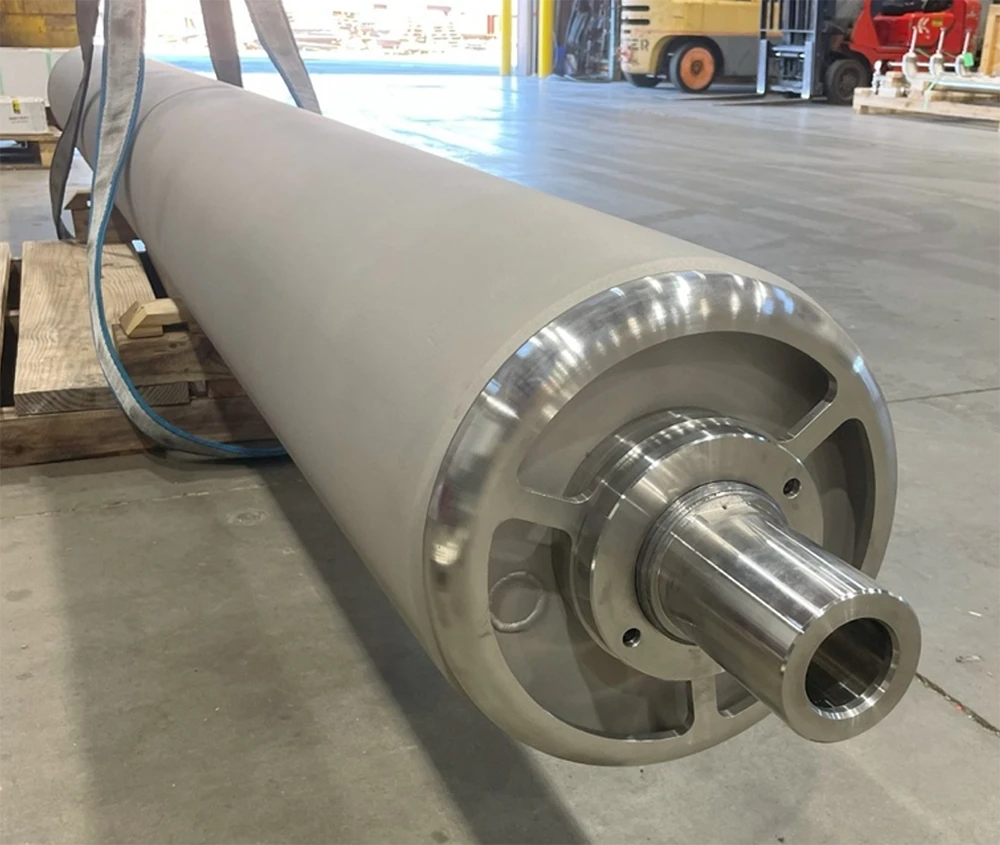
View of Universal Canister

Building on the project’s central objective, the project SAVANT team evaluated corrosion performance under realistic thermal, chemical, and mechanical stressors expected in a deep borehole environment. These data sets strengthen the scientific basis for Deep Isolation’s UCS and reinforce confidence in the system’s design life.

“This important study shows that Deep Isolation has achieved another critical milestone in the development of a safe method of disposing of radioactive nuclear waste – something the world critically needs,” said Rod Baltzer, Deep Isolation’s President and CEO. “Nuclear energy is facing a growing challenge. Global nuclear power capacity is forecast to increase by more than 300 GW by 2050, yet the world has not permanently disposed of any of the spent fuel it has created over the last 70 years. We believe our deep borehole technology will ultimately be the solution for safely and permanently disposal of nuclear waste deep underground, a solution the world needs.”

“The project SAVANT data significantly strengthens our understanding of how UCS and borehole system materials perform under the conditions expected in a deep geologic environment,” said Jesse Sloane, Executive VP of Engineering at Deep Isolation. “These results demonstrate wide margins of safety for the public and reinforce the robustness of our design approach. With these results in hand, we are well positioned to advance into larger scale testing.”

Stan Gingrich, Principal Engineer at Amentum and a project SAVANT collaborator, emphasized the importance of materials research in advancing disposal readiness. “The corrosion testing produced data representative of deep borehole disposal environments,” said Gingrich. “Our collaboration with Deep Isolation, including our co-authored paper on the results of materials under high temperature and pressure conditions (presented at Waste Management Symposia 2025), underscores how phased testing can bring innovative disposal solutions closer to reality.”

The project also incorporated supply chain research and cost estimation developed in partnership with the Electric Power Research Institute (EPRI). These findings highlight opportunities to build domestic manufacturing pathways for canisters, casing materials, and deployment equipment that could accelerate commercial readiness and reduce lifecycle costs for future disposal facilities.

Project SAVANT supports a broader industry effort to modernize the back end of the nuclear fuel cycle. As nations expand advanced reactor deployment, durable and predictable disposal pathways are increasingly essential to long-term planning and public confidence. The project SAVANT findings provide new, data-driven insights that can guide future regulatory, commercial, and technical decision-making for deep borehole disposal.

About Deep Isolation

Deep Isolation is the first company to undertake development of technologies for nuclear waste disposal in deep boreholes. Deep Isolation has commenced a planned three-year initiative to complete a full-scale, at-depth demonstration of its Universal Canister System and deep borehole solution, a critical milestone to the company’s commercialization strategy. When commercialized, Deep Isolation’s solution will offer a uniquely tailored solution to help countries identify, plan for and complete the necessary steps to dispose of their nuclear waste inventories. With 91 patents issued to date, Deep Isolation’s technology is being designed to leverage proven drilling practices to allow safe isolation of waste deep underground in horizontal, vertical, or slanted borehole repositories. Deep Isolation’s Universal Canister System was developed through a three-year project funded by the U.S. Department of Energy’s Advanced Research Projects Agency—Energy and is engineered to support integrated management of spent fuel and high-level waste from advanced reactors across storage, transportation and eventual disposal.

###

For more information, visit: deepisolation.com 

Media Contact:
Sophie McCallum
media@deepisolation.com

Investor Contact:
Caldwell Bailey
InvestorRelations@deepisolation.com

Forward-Looking Statements

Statements contained in this news release that are not historical facts are “forward-looking information” or “forward-looking statements” (collectively, “forward-looking statements”) within the meaning of Section 27A of the Securities Act and Section 21E of the Securities Exchange Act of 1934, as amended. Forward-looking statements include, but are not limited to, statements regarding our plans, objectives and expectations for our business, the future growth of our business and the nuclear energy and nuclear waste disposal industries as a whole, and future benefits expected to arise from our strategic partnerships. In certain cases, forward-looking statements can be identified by the use of words and phrases or variations of words and phrases or statements such as “may,” “should,” “expect,” “intend,” “plan,” “anticipate,” “believe,” “estimate,” “predict,” “will,” “could,” “project,” “target,” “potential,” “continue” and similar expressions. Forward-looking statements are based on management’s belief and assumptions, including current expectations and projections about future events and trends, and on information currently available to management.

Forward-looking statements in this or any other news release are subject to a number of risks, uncertainties, and assumptions that could cause actual results to be materially different from those expressed or implied by such forward-looking statements. Such risks, uncertainties, and assumptions are subject to a number of factors, including, among others: the failure of a market to develop for our deep borehole disposal solutions as quickly as we expect or at all; a failure of demand for our solution to develop sufficiently; regulatory and legal developments, including issues relating to obtaining regulatory approvals or permissions on the timelines we expect or at all; our lack of profitability; delays or failure in our initiative to complete a full-scale, at-depth demonstration of our Universal Canister System and our deep borehole solution; our failure to enter into contracts with customers or, once we do enter into contracts, to continue such contractual relationships or to receive new contract awards; our dependency on governmental contracts and awards; our failure to manage our growth effectively or to execute our business plan; a failure to sustain and expand relationships with governmental entities and strategic partners; failure in the assumptions or analyses we have used in supporting forecasts or plans; our inability to commercialize our products at scale; the development or deployment of other technologies or solutions supplanting or competing with our technologies; challenges to our intellectual property; failures to protect, maintain, enforce, and enhance our intellectual property, and claims by others of intellectual property infringement; political and public perceptions of nuclear energy, including perceptions as to accidents or other high-profile events involving nuclear power facilities or radioactive materials; our liquidity and ability to raise capital; any inability to control operating and project costs and project delays or other project-related problems; security (including cybersecurity) breaches or disruptions; geopolitical, macroeconomic, domestic events or crises, including supply chain disruptions and other risks and uncertainties outside of our control; weather and effects of climate change; and litigation or legal proceedings that may be brought against us.

The foregoing is not an exhaustive list of all the factors that may cause any forward-looking statements to prove inaccurate or our actual results to differ materially from our expectations and forecasts. Moreover, we operate in a highly regulated environment. New risks emerge from time to time. It is not possible for our management to predict all risks, nor can we assess the impact of all factors on our business or the extent to which any factor, or combination of factors, may cause actual results to differ materially from those contained in any forward-looking statements we may make. In light of these risks, uncertainties, and assumptions, the future events and trends discussed in this release may not occur and actual results could differ materially and adversely from those anticipated or implied in the forward-looking statements, and we cannot guarantee future results, performance, or achievements. Accordingly, readers should not place undue reliance on forward-looking statements. We undertake no obligation to update any forward-looking statements for any reason after the date of this release or to conform these statements to actual results or revised expectations, except as required by law.

Additional information concerning the factors above and other factors will be found in the Company’s public filings with the Securities and Exchange Commission (the “SEC”), including the sections titled “Forward-Looking Statements” and “Risk Factors” in the Company’s Quarterly Report on Form 10-Q for the quarter ended September 30, 2025 filed with the SEC on November 14, 2025 and in filings with the SEC that will be made. The Company’s SEC filings are available free of charge at www.sec.gov filed or upon written request to Deep Isolation Nuclear at InvestorRelations@deepisolation.com

### 

DOE-funded initiative delivers innovative canister system engineered for storage, transportation, and disposal of spent fuel from advanced nuclear reactors

BERKELEY, CA – Deep Isolation Nuclear, Inc. (“Deep Isolation” or the “Company”), a leading innovator in nuclear waste disposal technology, today announced the completion of Project UPWARDS which advances the development of a first-of-a-kind integrated waste management system for advanced reactors. Delivered on time and on budget with grant support from the U.S. Department of Energy (DOE) Advanced Research Projects Agency–Energy (ARPA-E) initiative, this three-year project has culminated in the manufacture, physical testing and validation of the world’s first disposal-ready Universal Canister System (UCS) for spent nuclear fuel and high-level radioactive waste from advanced reactors.

Completion of Project UPWARDS marks an important milestone in Deep Isolation’s roadmap toward full-scale demonstration and eventual use for spent nuclear fuel disposal. The results provide a strong technical foundation expected to support future regulatory engagement, pilot deployment, and commercialization efforts.

Project UPWARDS, which stands for Universal Performance Criteria and Canister for Advanced Reactor Waste Form Acceptance in Borehole and Mined Repositories Considering Design Safety, was carried out by Deep Isolation in partnership with the University of California, Berkeley, Lawrence Berkeley National Laboratory, and NAC International. Together, the team advanced critical technical milestones, including development of waste form acceptance criteria, and integrated safety and performance assessments across multiple repository types.  Working with R-V Industries, Inc. in Pennsylvania, the team completed fabrication of the first UCS prototype canister. Rigorous testing of the Company’s Universal Canister System with the Deep Borehole Demonstration Center in Texas provided evidence of mechanical integrity and operational viability in simulated real-world geologic conditions (without spent nuclear waste), providing a rare level of physical validation for a nuclear waste disposal system.

“This innovative Universal Canister System addresses one of the nuclear industry’s most urgent challenges – just at the time when the U.S. is significantly ramping up its investment in new nuclear technologies to deliver energy security and power the AI revolution,” said Jesse Sloane, Executive Vice President of Engineering at Deep Isolation and Principal Investigator for the project. “By fabricating and testing a universal, triple-purpose canister that is engineered for storage, transportation, and disposal of nuclear waste in multiple repository types, we have delivered a flexible and technically robust solution that has undergone extensive testing and is intended to support future real-world deployment.”

“Deep Isolation and its UPWARDS partners developed a groundbreaking disposal solution for a broad range of advanced fuels and recycling products,” said Assel Aitkaliyeva, ARPA-E Program Director. “ARPA-E’s mission is to support disruptive, outlier ideas, and this Universal Canister System has the potential to transform the nuclear industry by offering a safe, scalable pathway to manage used nuclear fuel.”

“NAC International is proud to have collaborated with Deep Isolation and the UPWARDS team to advance this groundbreaking canister system”, says Kent Cole, CEO at NAC International. “The Universal Canister System is a vital step toward scalable, safe, and cost-effective solutions for the back end of the fuel cycle. NAC International is eager to advance the integration of this exciting innovation into our existing licensed systems for storage and transportation of spent nuclear fuel and to partner with Deep Isolation in commercializing it around the world.”

The UCS is designed to accommodate a range of advanced reactor waste streams, including vitrified waste from reprocessing, TRISO spent fuel, and halide salts from molten salt reactors. Compatible with modern dry storage and transport infrastructure, the UCS also meets performance and safety requirements across both borehole and mined repository options, giving governments and operators greater flexibility and reduced uncertainty in future waste disposition.

By completing UPWARDS, Deep Isolation and its partners have established a strong technical foundation for integrated, cost-optimized nuclear waste strategies. This foundation is expected to support the Company’s next steps toward commercialization of the UCS across the U.S. advanced reactor sector and globally. Governments and operators may benefit from a flexible disposal approach designed to reduce uncertainty, accelerate licensing pathways, and support future waste disposition strategies.

About Deep Isolation

Deep Isolation is the first company to commercialize nuclear waste disposal in deep boreholes. It offers a uniquely tailored solution to help countries identify, plan for and complete the necessary steps to dispose of their nuclear waste inventories. With 91 patents issued to date, Deep Isolation’s technology leverages proven drilling practices to safely isolate waste deep underground in horizontal, vertical, or slanted borehole repositories. Deep Isolation’s Universal Canister System was developed through a three-year project funded by the U.S. Department of Energy’s Advanced Research Projects Agency—Energy and is engineered to support integrated management of spent fuel and high-level waste from advanced reactors across storage, transportation and eventual disposal.

###

For more information, visit: deepisolation.com 

Media Contact:
Sophie McCallum
media@deepisolation.com

Investor Contact:
Caldwell Bailey
InvestorRelations@deepisolation.com

Forward-Looking Statements

Statements contained in this news release that are not historical facts are “forward-looking information” or “forward-looking statements” (collectively, “forward-looking statements”) within the meaning of Section 27A of the Securities Act and Section 21E of the Securities Exchange Act of 1934, as amended. Forward-looking statements include, but are not limited to, statements regarding our plans, objectives and expectations for our business, the future growth of our business and the nuclear energy and nuclear waste disposal industries as a whole, and future benefits expected to arise from our strategic partnerships. In certain cases, forward-looking statements can be identified by the use of words and phrases or variations of words and phrases or statements such as “may,” “should,” “expect,” “intend,” “plan,” “anticipate,” “believe,” “estimate,” “predict,” “will,” “could,” “project,” “target,” “potential,” “continue” and similar expressions. Forward-looking statements are based on management’s belief and assumptions, including current expectations and projections about future events and trends, and on information currently available to management.

Forward-looking statements in this or any other news release are subject to a number of risks, uncertainties, and assumptions that could cause actual results to be materially different from those expressed or implied by such forward-looking statements. Such risks, uncertainties, and assumptions are subject to a number of factors, including, among others: the failure of a market to develop for our deep borehole disposal solutions as quickly as we expect or at all; regulatory and legal developments, including issues relating to obtaining regulatory approvals or permissions on the timelines we expect or at all; our lack of profitability; our failure to enter into contracts with customers or, once we do enter into contracts, to continue such contractual relationships or to receive new contract awards; our dependency on governmental contracts and awards; our  failure to manage our growth effectively or to execute our business plan; a failure to sustain and expand relationships with governmental entities and strategic partners; failure in the assumptions or analyses we have used in supporting forecasts or plans; our inability to commercialize our products at scale; the development or deployment of other technologies or solutions supplanting or competing with our technologies; challenges to our intellectual property, failures to protect, maintain, enforce, and enhance our intellectual property, and claims by others of intellectual property infringement;  political and public perceptions of nuclear energy, including perceptions as to accidents or other high-profile events involving nuclear power facilities or radioactive materials; our liquidity and ability to raise capital; any inability to control operating and project costs and project delays or other project-related problems; security (including cybersecurity) breaches or disruptions; geopolitical, macroeconomic, domestic events or crises, including supply chain disruptions and other risks and uncertainties outside of our control; weather and effects of climate change; and litigation or legal proceeds that may be brought against us.

The foregoing is not an exhaustive list of all the factors that may cause any forward-looking statements to prove inaccurate or our actual results to differ materially from our expectations and forecasts. Moreover, we operate in a highly regulated environment. New risks emerge from time to time. It is not possible for our management to predict all risks, nor can we assess the impact of all factors on our business or the extent to which any factor, or combination of factors, may cause actual results to differ materially from those contained in any forward-looking statements we may make. In light of these risks, uncertainties, and assumptions, the future events and trends discussed in this release may not occur and actual results could differ materially and adversely from those anticipated or implied in the forward-looking statements, and we cannot guarantee future results, performance, or achievements. Accordingly, readers should not place undue reliance on forward-looking statements. We undertake no obligation to update any forward-looking statements for any reason after the date of this release or to conform these statements to actual results or revised expectations, except as required by law.

Additional information concerning the factors above and other factors will be found in the Company’s public filings with the Securities and Exchange Commission (the “SEC”), including the sections titled “Forward-Looking Statements” and “Risk Factors” in the Company’s Quarterly Report on Form 10-Q for the third quarter ended September 30, 2025 filed with the SEC on November 14, 2025 and in filings that will subsequently be filed with the SEC. The Company’s SEC filings are available free of charge at www.sec.gov filed or upon written request to Deep Isolation Nuclear at InvestorRelations@deepisolation.com.

### 

BERKELEY, CA – Deep Isolation Nuclear, Inc. (“Deep Isolation” or the “Company”), a leading innovator in nuclear waste disposal technology, announced that Kent Cole, CEO of NAC International, Inc (“NAC”), a subsidiary of Kanadevia Corporation (TYO: 7004), resigned effective today from the Deep Isolation Board of Directors after serving since 2020. As NAC and Deep Isolation become more active in their collaboration on Deep Isolation’s multi-year end-to-end demonstration program, Cole will step away from his Board position to maintain clear governance and operational boundaries, consistent with best practices.

Under Cole’s leadership, NAC International has collaborated with Deep Isolation on multiple technical and strategic initiatives. NAC led Deep Isolation’s Series A financing round and continues to be a key strategic partner as both companies expand their collaboration into a full-scale end-to-end demonstration program.

“Kent has brought tremendous value to Deep Isolation over the past five years,” said Rod Baltzer, CEO of Deep Isolation. “His leadership, nuclear expertise, and thoughtful guidance have been instrumental to our progress. As we move into our multi-year, full-scale demonstration program, we will deeply miss Kent’s perspective on the Board but we look forward to continuing to work closely with NAC in this next chapter.”

“It has been a privilege to serve on Deep Isolation’s Board and witness its emergence as a global leader in nuclear waste disposal,” said Kent Cole, CEO of NAC International. “Deep Isolation’s team combines scientific rigor with an entrepreneurial drive that is rare in this industry. I look forward to continuing our strong relationship through NAC’s ongoing collaboration and project involvement.”

Deep Isolation and NAC remain aligned in their shared mission to advance safe, practical, and globally deployable nuclear waste solutions.

About Deep Isolation

Deep Isolation is the first company to commercialize nuclear waste disposal in deep boreholes. It offers a uniquely tailored solution to help countries identify, plan for and complete the necessary steps to dispose of their nuclear waste inventories. With 87 patents issued to date, Deep Isolation’s technology leverages proven drilling practices to safely isolate waste deep underground in horizontal, vertical, or slanted borehole repositories. Deep Isolation’s Universal Canister System was developed through a three-year project funded by the U.S. Department of Energy’s Advanced Research Projects Agency—Energy and is engineered to support integrated management of spent fuel and high-level waste from advanced reactors across storage, transportation and eventual disposal.

About NAC International

NAC International Inc. (www.nacintl.com) is a diversified corporation specializing in developing and licensing technology and providing full scope services for used nuclear fuel and radioactive materials packaging, storage, transport, and management. Since 1968, NAC has been a leader in providing solutions and services to the nuclear industry throughout the world, working with both government and commercial organizations. NAC provides a broad range of fuel cycle-related consulting and information services to clients worldwide. NAC maintains its corporate headquarters in Peachtree Corners, GA. NAC is a wholly owned subsidiary of Kanadevia Corporation, a global leader in design and construction of environmental systems, industrial plants, industrial machinery, process equipment, infrastructure-related equipment, disaster prevention systems, and precision machinery.

###

For more information, visit: deepisolation.com 

Media Contact:
Sophie McCallum
media@deepisolation.com

Investor Contact:
Caldwell Bailey
InvestorRelations@deepisolation.com

Forward-Looking Statements

Statements contained in this news release that are not historical facts are “forward-looking information” or “forward-looking statements” (collectively, “forward-looking statements”) within the meaning of Section 27A of the Securities Act and Section 21E of the Securities Exchange Act of 1934, as amended. Forward-looking statements include, but are not limited to, statements regarding our plans, objectives and expectations for our business, the future growth of our business and the nuclear energy and nuclear waste disposal industries as a whole, and future benefits expected to arise from our strategic partnerships. In certain cases, forward-looking statements can be identified by the use of words and phrases or variations of words and phrases or statements such as “may,” “should,” “expect,” “intend,” “plan,” “anticipate,” “believe,” “estimate,” “predict,” “will,” “could,” “project,” “target,” “potential,” “continue” and similar expressions. Forward-looking statements are based on management’s belief and assumptions, including current expectations and projections about future events and trends, and on information currently available to management.

Forward-looking statements in this or any other news release are subject to a number of risks, uncertainties, and assumptions that could cause actual results to be materially different from those expressed or implied by such forward-looking statements. Such risks, uncertainties, and assumptions are subject to a number of factors, including, among others: the failure of a market to develop for our deep borehole disposal solutions as quickly as we expect or at all; regulatory and legal developments, including issues relating to obtaining regulatory approvals or permissions on the timelines we expect or at all; our lack of profitability; our failure to enter into contracts with customers or, once we do enter into contracts, to continue such contractual relationships or to receive new contract awards; our dependency on governmental contracts and awards; our  failure to manage our growth effectively or to execute our business plan; a failure to sustain and expand relationships with governmental entities and strategic partners; failure in the assumptions or analyses we have used in supporting forecasts or plans; our inability to commercialize our products at scale; the development or deployment of other technologies or solutions supplanting or competing with our technologies; challenges to our intellectual property, failures to protect, maintain, enforce, and enhance our intellectual property, and claims by others of intellectual property infringement;  political and public perceptions of nuclear energy, including perceptions as to accidents or other high-profile events involving nuclear power facilities or radioactive materials; our liquidity and ability to raise capital; any inability to control operating and project costs and project delays or other project-related problems; security (including cybersecurity) breaches or disruptions; geopolitical, macroeconomic, domestic events or crises, including supply chain disruptions and other risks and uncertainties outside of our control; weather and effects of climate change; and litigation or legal proceeds that may be brought against us.

The foregoing is not an exhaustive list of all the factors that may cause any forward-looking statements to prove inaccurate or our actual results to differ materially from our expectations and forecasts. Moreover, we operate in a highly regulated environment. New risks emerge from time to time. It is not possible for our management to predict all risks, nor can we assess the impact of all factors on our business or the extent to which any factor, or combination of factors, may cause actual results to differ materially from those contained in any forward-looking statements we may make. In light of these risks, uncertainties, and assumptions, the future events and trends discussed in this release may not occur and actual results could differ materially and adversely from those anticipated or implied in the forward-looking statements, and we cannot guarantee future results, performance, or achievements. Accordingly, readers should not place undue reliance on forward-looking statements. We undertake no obligation to update any forward-looking statements for any reason after the date of this release or to conform these statements to actual results or revised expectations, except as required by law.

Additional information concerning the factors above and other factors will be found in the Company’s public filings with the Securities and Exchange Commission (the “SEC”), including the sections titled “Forward-Looking Statements” and “Risk Factors” in the Company’s Quarterly Report on Form 10-Q for the quarter ended September 30, 2025filed with the SEC on November 14, 2025 and in  filings with the SEC that will be made. The Company’s SEC filings are available free of charge at www.sec.gov filed or upon written request to Deep Isolation Nuclear at InvestorRelations@deepisolation.com.

### 
BERKELEY, CA – Deep Isolation Nuclear, Inc. (“Deep Isolation” or the “Company”), a leading innovator in nuclear waste disposal technology, today announced the appointment of Renée Hornbaker to its Board of Directors, effective immediately.

Ms. Hornbaker brings more than four decades of corporate leadership experience to Deep Isolation. In her roles as C-suite leader and CFO for both public and private companies, Renee has proven to be a strategic business leader with extensive experience delivering growth, business transformation, and profit improvement. Ms. Hornbaker is a CPA, Audit Committee Financial Expert, and Director Certified by the National Association of Corporate Directors (NACD). During her career, Ms. Hornbaker served as CFO at Stream Energy, Shared Technologies, and Flowserve Corporation, where she also served as Vice President of Business Development and Information Technologies. Ms. Hornbaker began her career with the audit practice of Deloitte.

Renée Hornbaker bio
Renée Hornbaker

“We welcome Renée to the Deep Isolation board,” said Rod Baltzer, President & CEO of Deep Isolation. “Renée’s vast experience with high-tech global businesses in the energy and industrial sectors, combined with her strong background in accounting, audit and regulatory oversight will be invaluable to Deep Isolation. We believe Renée’s extensive track record of overseeing successful business transformations will be instrumental as Deep Isolation works toward deploying its innovative nuclear waste storage and disposal solutions globally.”

“It’s an honor to join Deep Isolation as it embarks on a mission to deliver a safe, scalable, and cost-effective solution for nuclear waste disposal,” said Renée Hornbaker, newly appointed board member. “I see a tremendous opportunity for Deep Isolation as nuclear energy expands rapidly around the world and the need for permanent storage and disposal of nuclear waste grows with it. I look forward to working with the Deep Isolation team as they continue to execute against their strategy.”

Ms. Hornbaker currently serves on the boards of Eastman Chemical Company, Freeman Company, and Berry Corporation, where she serves as Board Chair. She earned an MBA with Beta Gamma Sigma Honors and BA from Indiana University in Bloomington, Indiana. She has earned credentials from NACD including board leadership fellow, director certified, cybersecurity board oversight, and climate oversight and is chair emeritus of the NACD North Texas Chapter. Ms. Hornbaker has been recognized for her governance expertise and business leadership as an outstanding director, including NACD’s 2023 Private Company Director of the Year and outstanding CFO.

Deep Isolation is revolutionizing the nuclear waste disposal industry through its innovative deep borehole technology, delivering a safe, scalable, and cost-effective solution for permanent nuclear waste disposal. The Company’s proprietary solution will place corrosion-resistant canisters containing nuclear waste in deep boreholes over one kilometer below the Earth’s surface, utilizing proven directional drilling technology to provide permanent isolation at a fraction of the cost of traditional mined repositories.

About Deep Isolation

Deep Isolation is the first company to commercialize nuclear waste disposal in deep boreholes. It offers a uniquely tailored solution to help countries complete the necessary steps to dispose of their nuclear waste inventories. With 87 patents issued to date, Deep Isolation’s technology leverages proven drilling practices to safely isolate waste deep underground in horizontal, vertical, or slanted borehole repositories. Deep Isolation’s Universal Canister System (UCS) was developed through a three-year project funded by the U.S. Department of Energy’s Advanced Research Projects Agency-Energy (ARPA-E) and is engineered to support integrated management of spent fuel and high-level waste from advanced reactors across storage, transportation and eventual disposal.

For more information, visit: deepisolation.com 

Media Contact:
Sophie McCallum
media@deepisolation.com

Investor Contact:
Caldwell Bailey
InvestorRelations@deepisolation.com

Forward-Looking Statements

Statements contained in this news release that are not historical facts are “forward-looking information” or “forward-looking statements” (collectively, “forward-looking statements”) within the meaning of Section 27A of the Securities Act and Section 21E of the Securities Exchange Act of 1934, as amended. Forward-looking statements include, but are not limited to, statements regarding our plans, objectives and expectations for our business, the future growth of our business and the nuclear energy and nuclear waste disposal industries as a whole, and future benefits expected to arise from our strategic partnerships. In certain cases, forward-looking statements can be identified by the use of words and phrases or variations of words and phrases or statements such as “may,” “should,” “expect,” “intend,” “plan,” “anticipate,” “believe,” “estimate,” “predict,” “will,” “could,” “project,” “target,” “potential,” “continue” and similar expressions. Forward-looking statements are based on management’s belief and assumptions, including current expectations and projections about future events and trends, and on information currently available to management.

Forward-looking statements in this or any other news release are subject to a number of risks, uncertainties, and assumptions that could cause actual results to be materially different from those expressed or implied by such forward-looking statements. Such risks, uncertainties, and assumptions are subject to a number of factors, including, among others: the failure of a market to develop for our deep borehole disposal solutions as quickly as we expect or at all; regulatory and legal developments, including issues relating to obtaining regulatory approvals or permissions on the timelines we expect or at all; our lack of profitability; our failure to enter into contracts with customers or, once we do enter into contracts, to continue such contractual relationships or to receive new contract awards; our dependency on governmental contracts and awards; our  failure to manage our growth effectively or to execute our business plan; a failure to sustain and expand relationships with governmental entities and strategic partners; failure in the assumptions or analyses we have used in supporting forecasts or plans; our inability to commercialize our products at scale; the development or deployment of other technologies or solutions supplanting or competing with our technologies; challenges to our intellectual property, failures to protect, maintain, enforce, and enhance our intellectual property, and claims by others of intellectual property infringement;  political and public perceptions of nuclear energy, including perceptions as to accidents or other high-profile events involving nuclear power facilities or radioactive materials; our liquidity and ability to raise capital; any inability to control operating and project costs and project delays or other project-related problems; security (including cybersecurity) breaches or disruptions; geopolitical, macroeconomic, domestic events or crises, including supply chain disruptions and other risks and uncertainties outside of our control; weather and effects of climate change; and litigation or legal proceeds that may be brought against us.

The foregoing is not an exhaustive list of all the factors that may cause any forward-looking statements to prove inaccurate or our actual results to differ materially from our expectations and forecasts. Moreover, we operate in a highly regulated environment. New risks emerge from time to time. It is not possible for our management to predict all risks, nor can we assess the impact of all factors on our business or the extent to which any factor, or combination of factors, may cause actual results to differ materially from those contained in any forward-looking statements we may make. In light of these risks, uncertainties, and assumptions, the future events and trends discussed in this release may not occur and actual results could differ materially and adversely from those anticipated or implied in the forward-looking statements, and we cannot guarantee future results, performance, or achievements. Accordingly, readers should not place undue reliance on forward-looking statements. We undertake no obligation to update any forward-looking statements for any reason after the date of this release or to conform these statements to actual results or revised expectations, except as required by law.

Additional information concerning the factors above and other factors will be found in the Company’s public filings with the Securities and Exchange Commission (the “SEC”), including the sections titled “Forward-Looking Statements” and “Risk Factors” in the Company’s Current Report on Form 8-K dated July 23, 2025 filed with the SEC on July 28, 2025 and in subsequent filings with the SEC. The Company’s SEC filings are available free of charge at www.sec.gov filed or upon written request to Deep Isolation Nuclear at InvestorRelations@deepisolation.com.

###