
Newer nuclear fission reactors offer greater safety and employ cutting-edge technologies, far different from those used just a few decades ago, but the problem of nuclear waste remains.Various solutions have been considered, and the United States is one of the countries that has experimented most in this regard.
As always, the private sector is leading the way with a new project based on deep-sea disposal. The company Deep Isolation has announced encouraging results from testing a system that identifies underground drilling as the answer to the need for stable and permanent confinement of radioactive waste.
The main challenge is ensuring there are no long-term risks, so all possibilities are being explored through in-depth simulations. Analyses conducted on nuclear waste show promising compatibility with this type of geological repository, according to the company. Given this highly sensitive issue, in-depth studies will be necessary, but for now, the physical models used indicate long-term safety levels exceeding established objectives and extremely low radiation exposure, well below the most stringent standards. This is not a one-off project, and in fact involves collaboration between Deep Isolation and several industry players such as Oklo Inc., along with other US research centers.
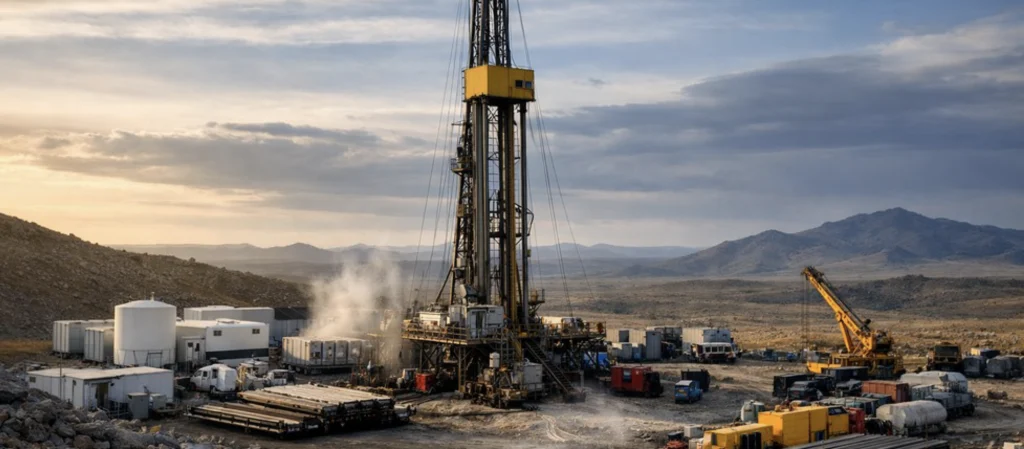
But operationally speaking, how do they plan to operate? Currently, the idea involves relying on drilling techniques already used in the energy industry, adapting them to create vertical, horizontal, or inclined deposits at great depths. The waste will then be sealed inside containers designed to withstand the test of time, while also being isolated by natural barrierssuch as clay or granite rocks.
This isn’t even the first time a similar approach has been attempted, and already in 2019, afirst demonstration test used a prototype container, free of radioactive material, which was lowered and then successfully recovered from a horizontal well using standard drillingtechniques. Therefore, the doubts about its feasibility are truly minimal, but as you can well imagine, this is not the main problem.
And if long-term safety concerns weren’t enough, there are also regulatory issues. In the United States, large-scale adoption of these repositories would require legislative changes to officially authorize the use of deep wells for high-level waste, so the process could take longer than expected.
Translated into English from: https://www.hdblog.it/green/articoli/n653504/smaltimento-rifiuti-nucleari-profondo